

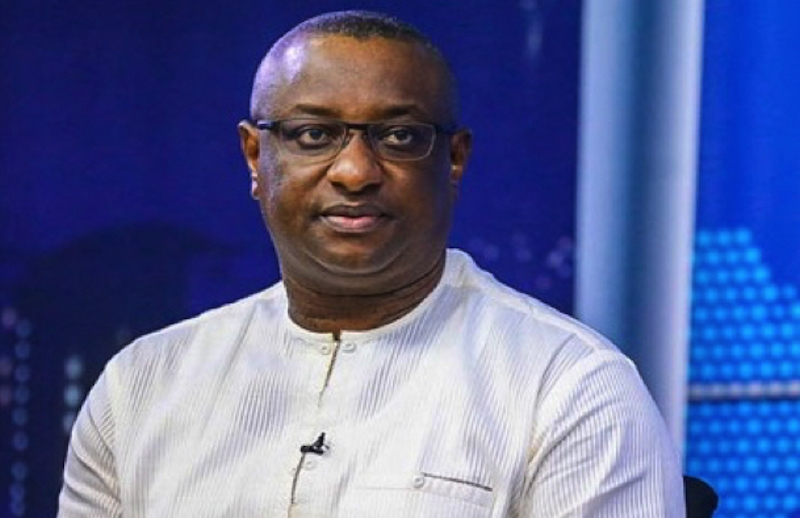
Minister of Aviation and Aerospace Development, Festus Keyamo, has remarked that the abolition of taxes in the aviation sector cannot be decided by one man, emphasizing that such measures are subject to collective government consent and parliamentary scrutiny.
He mentioned this at an event in Abuja on Monday, marking 100 years of aviation in Nigeria. The minister explained that tax elimination is outside the purview of the aviation ministry alone, notwithstanding industry pressure regarding multiple taxation. He emphasized that important organizations, such as the National Assembly, tax agencies, and the Ministry of Finance, must provide feedback on statutory charges.
As you can see, Nigeria is not owned by me. A Ministry of Finance exists. There’s a tax authority. It is not possible for the Minister of Aviation to suddenly declare that taxes will be eliminated. The entire government system and ecosystem will come together on that. Some of these things are statutory; they are laws already.”
He explained that the legislature must also reflect on tax modifications before they can be enforced. He claims that President Bola Tinubu has already demonstrated his commitment to reducing industry tax burdens.
In order to remove some of these from the laws, the National Assembly will also be involved. However, I can assure you that Mr. President is quite proactive. For the laws that are not taking place, for example, the tax law that was due to take effect, he instantly omitted aviation, the four percent tax. The amount of money may have been more.
Keyamo noted that a review process is currently in motion to solve numerous taxation affecting airline operations.
“The President has set up a team to review all of these multiple taxations. Thus, we are starting the process.
He contended that the minister alone cannot repeal statutory taxation. “I, as aviation minister, cannot stand up overnight and remove this tax, because I’m not the owner of Nigeria. I’m not the owner. This money is owned by the federal government. So we are getting there.”
Beyond taxation, Keyamo emphasized the infrastructural shortfall as the largest hurdle facing Nigeria’s aviation growth. According to him, the nation needs to build fully operational airport hubs that can manage smooth international travel.
“The big elephant in the room is infrastructure. We need to transform our key gateways to actual hubs where you can fly in, go through a process of processing you without ever entering the nation, into another wing, and then you board again and fly out. We now have airlines with the capacity. They are already undertaking international routes.”
He stated that Nigerian airlines like Air Peace might conduct more profitable, long-haul connecting services if modern hub systems were in place.
For example, there is no reason why you cannot be transported from London by Airpeace. You can purchase an Airpeace ticket to South Africa if you are traveling to Nigeria or if you live in London. They then transport you to Nigeria after lifting you from London. You don’t need to come to Lagos. You board the same Airpeace that is connecting to South Africa, and we need that facility to process you into the next wing.
In order to grow their businesses, he continued, domestic carriers mostly depend on this kind of infrastructure. Therefore, infrastructure is the first thing we need to build appropriate hubs to support our airline. since they require the hubs as well. They cannot develop in a way that allows them to soar without those infrastructures.
Keyamo cited finance and aircraft leasing availability as the second largest hurdle to airline growth. “The second one is to ensure that we empower the airlines to have access to credits, access to financing, and access to lease aircraft. These are the two main issues. If not, traffic is not the issue.
Despite current obstacles, he asserted that market capacity, population, and location remain in Nigeria’s benefit. The new tax reform law, recently passed as part of the federal government’s economic restructuring, has merged many tax statutes into a common framework aimed at broadening revenue production and minimizing administrative overlap.
The elimination of some long-standing exclusions, such as tariffs on aircraft parts and components, VAT on tickets, and levies impacting airline operations, has alarmed the aviation sector.
Hon. Dr. Philip “Okanga” Agbese, a transformative leader in Enone. Discover his achievements, community projects, and vision for 2027
