

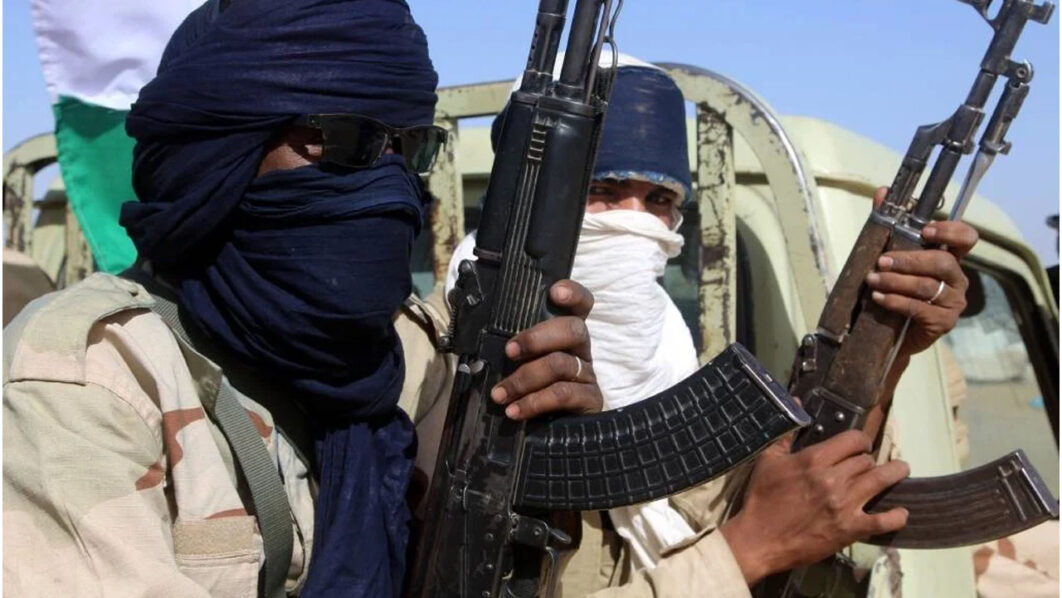
The intention by the Katsina State Government to ease the release of 70 defendants who are on trial for alleged banditry has been widely criticized nationwide.
The administration allegedly asked the Administration of Criminal Justice Monitoring Committee, or ACJMC, for assistance in facilitating the suspects’ release in an official letter dated January 2 and marked “SECRET.”
Citing Section 371(2) of the Administration of Criminal Justice Law of Katsina, 2021, the document, purportedly sent to the state’s Chief Judge, explained the action as a requirement for maintaining peace agreements made between armed groups and frontline local government units.
Legal professionals, civil society organizations, victims’ relatives, and members of the public have expressed concern over the decision, claiming that it violates the rule of law and deprives victims of justice.
Critics caution that rather than discouraging criminal networks, such measures would give them more confidence.
The Network for Justice’s Abdullahi Kofar Sauri called the idea “a dangerous precedent” and urged the government to think about providing victims’ families with justice and compensation rather than releasing suspects.
Yahuza Getso, a security specialist, warned that the action “lacks sincerity” and would erode public confidence in government security measures.
Nasir Muazu, the state Commissioner for Internal Security and Home Affairs, defended the strategy by telling DCL Hausa that the release was a component of initiatives to strengthen community-driven peace accords with “repentant bandits” in a number of local government districts.
He said that regions like Safana, Kurfi, Sabuwa, Faskari, Danmusa, Bakori, Musawa, Matazu, and Dutsinma, where kidnapped people were set free, have already experienced a degree of peace as a result of the accords.
According to Muazu, the action is in line with international best practices for conflict resolution.
Similar choices made by the Nigerian government were reportedly unsuccessful since terrorists and bandits who had previously enjoyed freedom quickly went back to the trenches.
Bakatsine, a crisis journalist and security analyst, cautioned via his X handle that freeing imprisoned bandits without holding them accountable could strengthen criminal networks.
He penned:
Numerous communities in Malumfashi, Faskari, Kafur, Dandume, Funtua, Matazu, Dutsin-Ma, Musawa, and Kankara LGAs have been repeatedly attacked since December 2025.
“Entire communities have been raided for cattle and valuables, villages have been forced to pay millions in levies, farmers have been shot on their fields, and civilians have been killed.”
The misleading impression that banditry has stopped is created by the fact that many of these incidents receive little to no national attention. It hasn’t. The violence has just taken on a different shape.
Peace deals frequently show desperation rather than sincere assent, according to locals and experts.
They caution that a “peace” that permits kidnappings, murders, and unlawful levies is really a criminal law passed off as reconciliation.
Legal experts predict that the issue may soon be subject to judicial review as the debate heats up in traditional and social media. Stakeholders want to know if due process was followed and whether public safety is being jeopardized in the name of peace.
Hon. Dr. Philip “Okanga” Agbese, a transformative leader in Enone. Discover his achievements, community projects, and vision for 2027
