
EFCC Witness Says Emefiele Complied with Buhari’s Directive to Produce Redesigned Naira Notes Locally

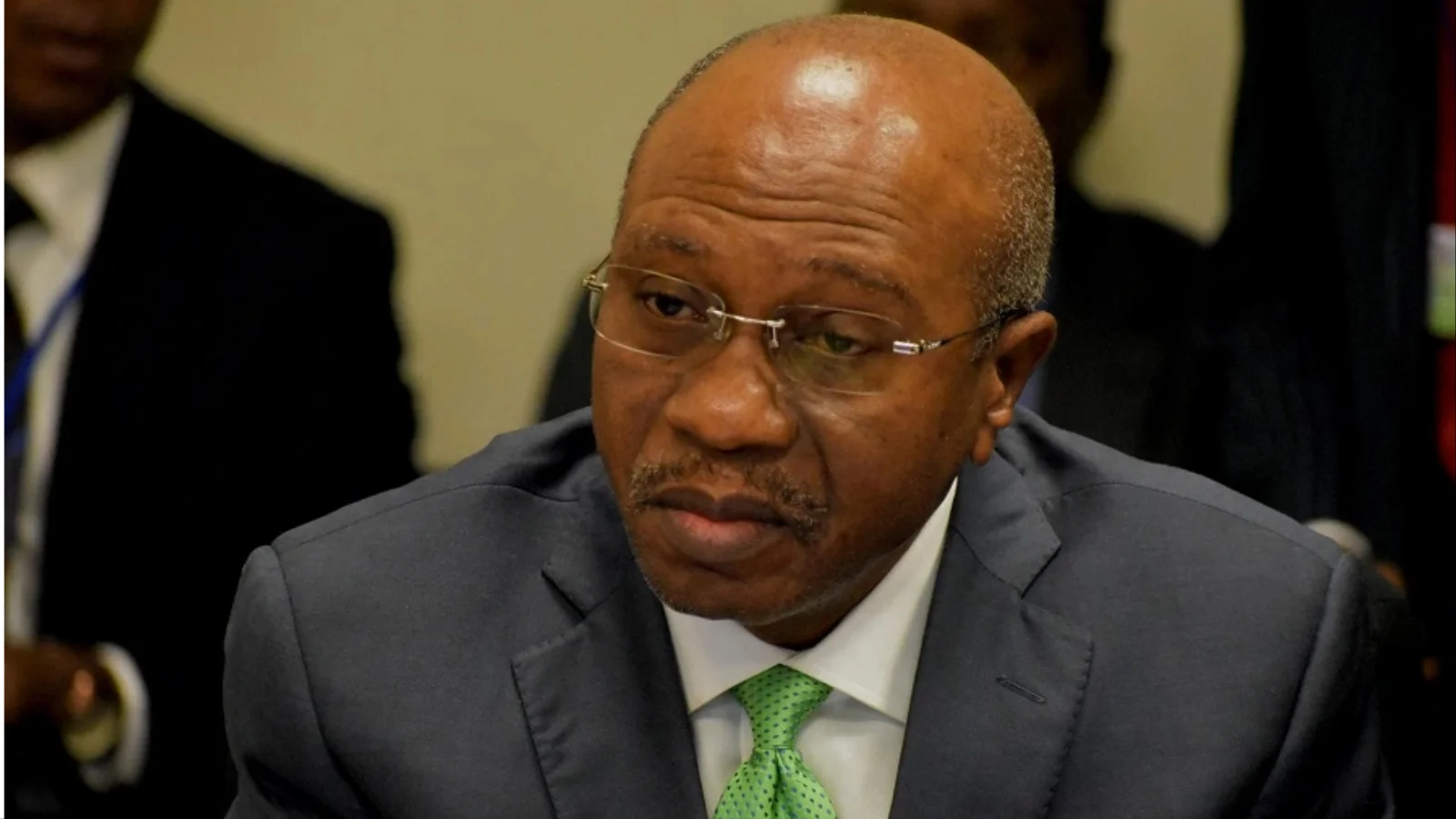
The redesigned naira notes were made locally by the Nigerian Security Printing and Minting Company, or NSPMC, per the directive of late President Muhammadu Buhari, according to a prosecution witness in the ongoing trial of Godwin Emefiele, the immediate past governor of the Central Bank of Nigeria, or CBN, in the Federal Capital Territory, or FCT, on Tuesday.
The Economic and Financial Crimes Commission, or EFCC, is prosecuting Emefiele in front of Judge Maryann Anenih in Maitama, Abuja, on four counts of violating the law and committing an unlawful act that harms the public.
Among other things, Emefiele was accused in the charge, designated CR/264/2024, of violating Section 19 of the CBN Act between October 19, 2022, and March 5, 2023, by permitting the printing of 375,520,000 pieces of color-swapped N1,000 notes at a total cost of N11,052,068,062 without the CBN Board’s recommendation or the President of the Federal Republic of Nigeria’s careful approval, causing harm to the public.
The offences allegedly committed by him, according to EFCC, were against Section 123 of the Penal Code, Cap 89 Laws of the Federation, 1990 and punishable under the same law.
On the other hand, he entered a not guilty plea.
The seventh prosecution witness, PW7, Chinedu Emere, an EFCC investigator, told the court during the case’s resumed hearing on Tuesday that Emefiele wrote a memo to former President Buhari on October 6, 2022, requesting permission to redesign, produce, and reissue the redesigned N1,000, N500, N200, and N100 notes while being cross-examined by Emefiele’s attorney, Olalekan Ojo, SAN.
He claimed that in his minute on the paper, the previous president authorized the redesign of the naira notes but mandated that they be made locally.
“The defendant (Emefiele) sought approval of bank notes attached to the memorandum which had been redesigned already.
“The former president ordered that the production be completed. “Approved,” he wrote. but to be made locally,” PW7 informed the judge.
Emefiele cited a number of reasons for the redesign policy, including the public hoarding of naira notes, the high rate of counterfeiting, and the growing scarcity of banknotes in circulation.
The witness further stated that in order to produce the updated notes, CBN raised bills of settlement to Nigerian Security Printing and Minting Company, or NSPMC.
Asked to confirm to the court if the naira notes were produced by NSPMC, the prosecution witness answered in the affirmative, saying that, “The Nigerian Security Printing and Minting Company produced the redesigned notes. This complies with the presidential order that the Nlnaira notes be produced locally.
Even though NSPMC produced the notes locally, he informed the court that a foreign company called De La Rue had redesigned them.
In 2023, he told the court, CBN paid De La Rue in British pounds sterling for the redesign of the notes, and it paid NSPMC in naira for the production.
The witness added that the features of the notes were also products of the foreign company, confirming that De La Rue was the original designer of the naira notes that were later redesigned.
He told the court that the investigation was not focused on whether any Nigerian company had ever designed naira notes for the Nigerian government and that he could not recall any deputy governors under Emefiele mentioning this to the EFCC investigative team over the course of the probe.
The witness also stated that Buhari eventually introduced the updated notes, although he was unable to recall whether the former president voiced any objections.
He informed the court that the EFCC investigation team came up with an investigative report after its assignment.
In the meantime, Justice Anenih ordered the prosecution to provide the defense with the investigative report in order to support its defense, even though Rotimi Oyedepo, SAN, the prosecuting attorney, objected to Emefiele’s attorney’s request.
After that, she postponed the case’s next hearing until Tuesday, February 10, 2026.
Hon. Dr. Philip “Okanga” Agbese, a transformative leader in Enone. Discover his achievements, community projects, and vision for 2027
