

The ethical and moral perspectives on the nature of good governance, the social contract, and public integrity in Nigeria under President Bola Tinubu’s government are echoed in the aforementioned comment from an unnamed researcher. The premise is that the consent of the governed, which suggests a frequently unwritten agreement to act in the citizens’ best interests, is the foundation for the legitimacy of government.
The current condition of affairs in Nigeria is indicative of a fiduciary view of public office, according to which the state’s primary responsibility is to keep its promises to the people.
When President Tinubu promised in December 2023 to reconstruct Tudun Biri, a peaceful hamlet in Kaduna State’s Igabi Local Government Area that had been destroyed by a deadly military drone misfire, some people wrote it off as one of those meaningless government pledges.
However, on Friday, January 29, 2026, the village that had been abandoned and reduced to a shell of its once-vibrant self sprang to life. The president’s pledge to reconstruct the community—which had been devastated by a military drone mishap bomb that killed innocent people, injured others, and left many traumatized—became a happy reality.
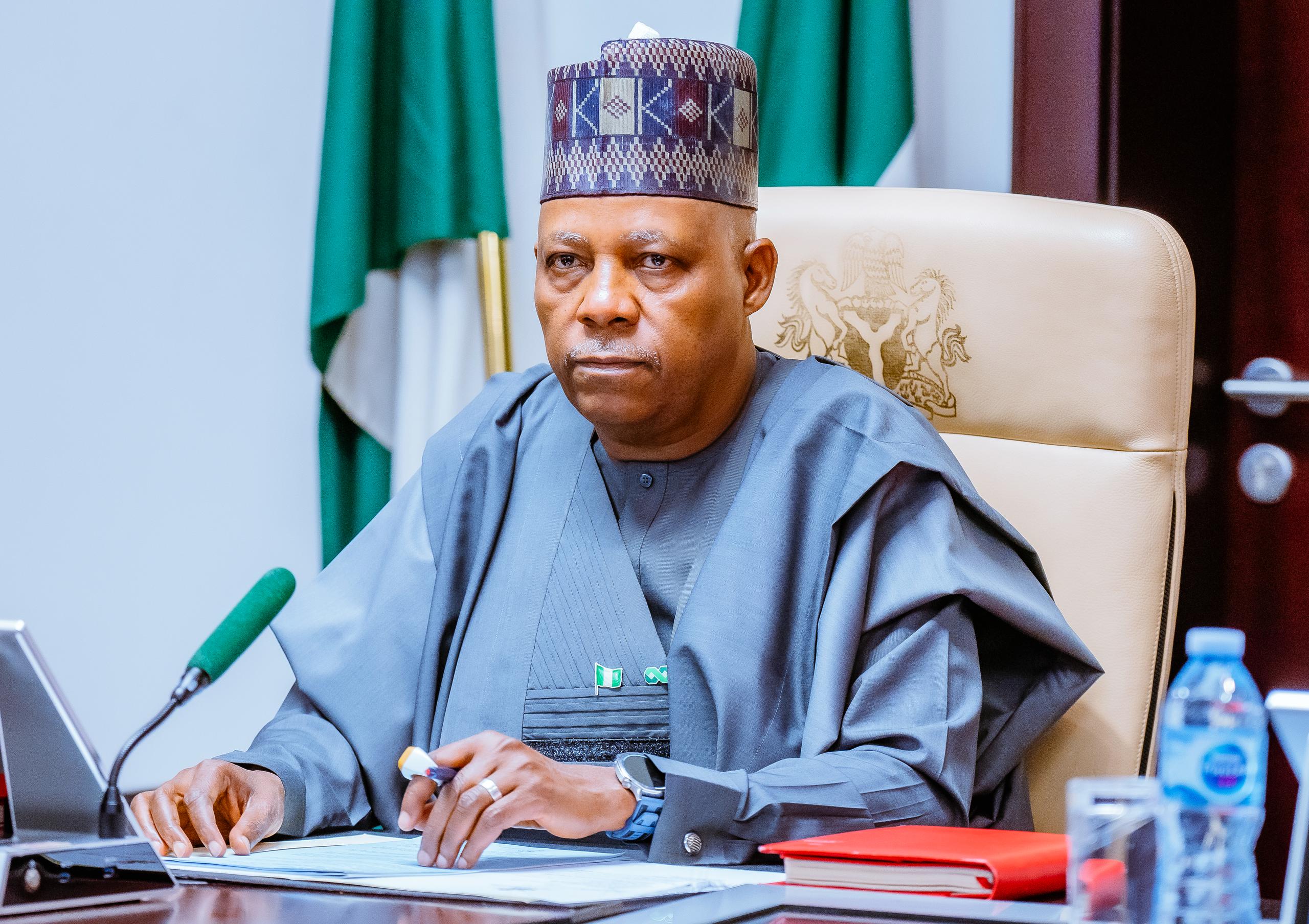
With over 133 finished dwelling units, educational facilities, and other cutting-edge infrastructure, Vice President Kashim Shettima officially opened the Tudun Biri Resettlement Scheme.
When VP Shettima visited the tragedy’s victims in December 2023, he was astounded by what he observed at the Barau Dikko Teaching Hospital in Kaduna, where some of the wounded—the most of whom were women and children—were being treated. He was clearly fighting to stop the tears from streaming down his cheeks. He instructed the National Emergency Management Agency (NEMA) to make sure the victims received enough relief supplies after being moved by the heartbreaking scene.
The Vice President informed community leaders and other state stakeholders that President Tinubu had promised to rehabilitate the area, adding that “most importantly, the President approved the commencement of the Pulaku Initiative by next month.” The President’s special non-kinetic response to the problems in the North West is the Pulaku Initiative.
Our original plan was to launch the initiative in Sokoto, but the President ordered that the Pulaku Initiative be launched here in Kaduna State due to recent developments. And the first person to benefit from that plan will be Tudun Biri. As a non-kinetic approach to the issues of kidnapping and banditry in the Northwest, it’s a comprehensive set of remedies,” he continued.
The vice president also told the leaders of the community how concerned President Tinubu had been about the terrible event, admitting that it was horrific to lose even one life, regardless of the number of deaths. “The President is quite worried, which is why I am here. What transpired profoundly affected him. Let’s avoid discussing the figures, as the late Dele Giwa correctly noted: “One life taken in cold blood is as gruesome as millions lost in a pogrom.”
Senator Shettima kept her word and visited Kaduna last Friday to officially launch the resettlement plan. A government that stresses accountability, transparency, and keeping its word is viewed as an ideal and frequently contrasted with the reality of broken promises. This is exactly what the inauguration represents; it is evidence of the Tinubu administration’s dedication to fulfilling its commitments and producing outcomes.
According to the vice president, the concept is based on the straightforward yet potent idea that national stability must be strengthened, divides must be healed, and governance must serve people.
Today serves as a real-life example of that idea. The Tudun Biri Resettlement Scheme’s commissioning is a testament to our shared conviction that justice is what binds a country together and that compassion is the state’s moral strength rather than its weakness,” he said.
The ability to fulfill commitments related to social welfare, economic growth, and human rights is the real litmus test for good governance. The Tinubu administration has demonstrated that even the most difficult tasks can be completed with dedication, teamwork, and caring leadership. An excellent illustration of this dedication is the Pulaku Initiative, which is now known as RSPIC.
The goal of the Federal Government intervention project is to reintegrate, rehabilitate, and relocate internally displaced people (IDPs). RSPIC is a crucial part of the administration’s non-kinetic strategy to handle insecurity, especially in the North West and North Central regions. It was introduced by President Tinubu in July 2024 and is supervised by Vice President Shettima.
In order to provide long-term, permanent solutions, such as constructing sturdy homes, schools, and hospitals for communities uprooted by banditry and violence, the program goes beyond short-term humanitarian help. It is intended to cover seven states—Sokoto, Kebbi, Benue, Katsina, Zamfara, Niger, and Kaduna—that were first impacted by banditry and conflicts between farmers and herders. To achieve social and economic reintegration, the plan calls for building roads, clinics, residential units, and skill-building facilities.
After the security incident, the pilot phase was started at Tudun Biri, Kaduna State. The central government and the Kaduna State administration, led by Governor Uba, worked together to make the project a success.
Beyond only offering housing, the Tudun Biri Resettlement Scheme has a significant influence. It is about giving the people of Tudun Biri their dignity, hope, and feeling of community back.
Vice President Shettima stated that the Tudun Biri Resettlement Scheme provides “a practical assurance that the Nigerian state does not abandon its citizens in times of adversity” and “a vehicle for hope for families whose lives were disrupted.”
He went on to say that the plan reflects the Federal Government’s unwavering determination to take urgent action in response to the humanitarian crisis and internal displacement that have occurred throughout Nigeria.
He claims that the program gives families whose lives were upended hope by offering a concrete guarantee that the Nigerian government does not desert its people during difficult times.
The Tudun Biri narrative is unquestionably a wonderful example of what can be accomplished when leaders collaborate flawlessly. President Tinubu’s plan for the community’s rebuilding was more than simply a pledge; it was a dedication to giving the residents of Tudun Biri their honor and hope back. And he knew exactly who to put in charge of realizing that vision: Vice President Shettima.
The project’s success was largely due to Senator Shettima’s constant commitment and attention. He put in a lot of overtime to make sure that everything was done correctly and that the project was finished on schedule.
Additionally, the host governor, Senator Uba Sani, was more than happy to collaborate and offer the assistance required to carry the project through to completion.
The project’s execution is what really sets it apart. The VP underlined that cooperation, trust, and shared ownership between the federal government, state authorities, host communities, and development partners are what make the project successful. Governor Sani acknowledged the Vice President’s oversight, which made sure the project was completed on time, and commended the President’s caring leadership.
The project’s true beneficiaries are ultimately the residents of Tudun Biri. With access to contemporary housing, healthcare, and education, they have been given a fresh lease on life. These leaders’ combined efforts are the reason the community is flourishing.
This is how governance ought to appear: leaders cooperating, prioritizing the demands of their constituents, and producing outcomes. President Tinubu’s dedication to reconstructing communities and reestablishing stability under the Renewed Hope Agenda is demonstrated by this concept, which can be duplicated throughout Nigeria.
Hon. Dr. Philip “Okanga” Agbese, a transformative leader in Enone. Discover his achievements, community projects, and vision for 2027
