

Dangote Petroleum Refinery has issued a warning that Nigerian fuel prices could approach N1,000 per litre if the country continues to rely on coastal supply of petroleum products.
In order to guarantee pricing consistency for customers, the company emphasized that its preferred gantry loading method is still the most effective and economical.
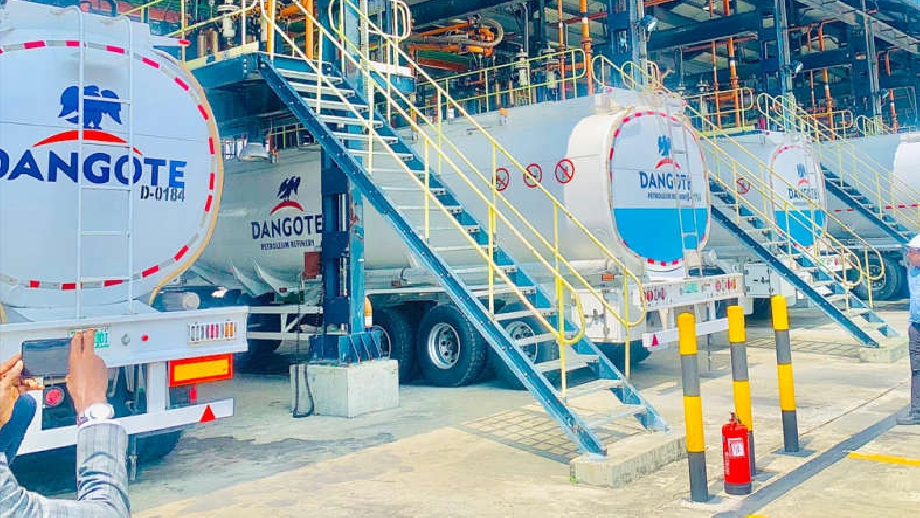
In a statement released on Thursday, the refinery clarified that ongoing investments in vital infrastructure, such as a “world-class gantry facility” with 91 loading bays that can load up to 2,900 tankers every day, back its viewpoint.
It claimed that the facility, which is open around-the-clock, can remove more than 50 million liters of premium motor spirit, 14 million liters of diesel, and other refined goods every day.
The refinery emphasized that gantry evacuation eliminates additional expenditures, even if it acknowledged that coastline loading is an alternative where logistics demand it.
The company claimed that “direct gantry evacuation helps to optimize costs, improve distribution efficiency, and support price stability by eliminating port charges, maritime levies, and vessel-related costs that do not add value to end users.”
Additionally, it made clear that merchants are allowed to select the evacuation method of their choice, with PMS and other sophisticated items offered at competitive rack pricing.
However, depending too much on coastal delivery, especially inside Lagos, could result in unnecessary expenses that have a significant impact on fuel prices, consumer welfare, and the general state of the economy. The refinery stated, “We believe that coastal logistics can add about N75 per litre to the cost of petrol, which, if passed on to consumers, would push the pump price of PMS close to N1,000 per litre.”
Based on Nigeria’s typical daily consumption of around 50 million liters of PMS and 14 million liters of diesel, the business also calculated that continued reliance on coastal logistics might result in an additional annual cost of about N1.75 trillion.
It cautioned that Nigerian consumers or producers will eventually be responsible for this expense.
Calls for coordinated national pipeline infrastructure investment were also rekindled by the Dangote refinery. It made the case that operational pipelines connecting refineries and depots would boost national energy security, increase supply reliability, and drastically reduce distribution costs.
The refinery responded to accusations that it imports completed petroleum products by calling them false.
We solely purchase intermediate feedstock in accordance with international industry standards, even if our Residue Fluid Catalytic Cracking Unit is presently undergoing maintenance. We urge anyone who has solid proof of the importation of a finished product to show it to the relevant regulatory bodies. The refinery reaffirmed that such assertions are frequently made by those looking to defend a sustained reliance on fuel imports.
The company explained the advantages of domestic refining by pointing out that since operations started, PMS prices have decreased from roughly N1,250 per litre to between N839 and N900, while diesel prices have decreased from approximately N1,700 per litre to between N980 and N990.
It further stated that a stronger naira, which is currently trading at roughly N1,385 to the dollar, has been a result of the enhanced local supply, which has also significantly decreased gasoline imports and eased demands on foreign exchange.
In closing, the refinery urged legislators, marketers, and regulators to support distribution and logistics choices that safeguard consumers, support national economic interests, and maintain the long-term advantages of domestic refining.
Hon. Dr. Philip “Okanga” Agbese, a transformative leader in Enone. Discover his achievements, community projects, and vision for 2027
