

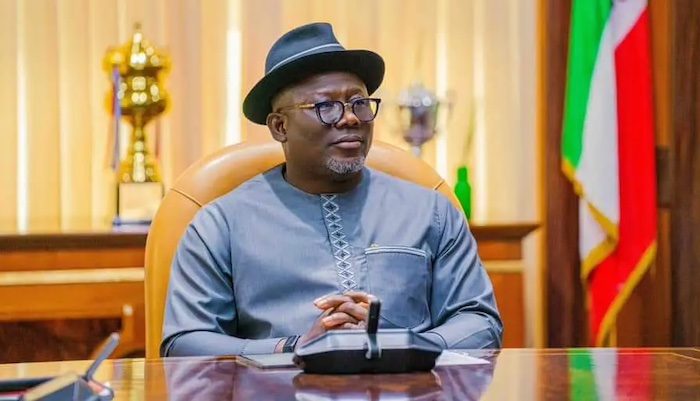
Some members of the state’s political elite fiercely opposed Sheriff Oborevwori in the run-up to the 2023 Delta State gubernatorial election. He was rejected as a failure by his detractors, who included prominent members of his own Peoples Democratic Party (PDP) at the time as well as opponents from the All Progressives Congress (APC), the main opposition party at the time. They claimed he lacked the necessary gravitas, exposure, and carriage to lead a complicated state like Delta.
These opinions were supported by pundits who questioned whether the former Speaker of the Delta State House of Assembly had the intelligence and vision to lead the oil-rich state.
But since taking office on May 29, 2023, Governor Oborevwori has created a wave of admiration throughout Delta State in addition to silencing his detractors with his outstanding performance. There is a general feeling of surprise that transcends all political affiliations and emotions: “This is beyond our expectation.”
Residents, businesspeople, and even previous detractors now publicly praise and thank a leader whose actions have changed the state’s infrastructure in a way that has never been seen before.
Oborevwori has implemented and finished projects that affect every part of the state, from urban centers to isolated riverine communities, by utilizing his MORE Agenda, which stands for Meaningful Development, Opportunities for All, Realistic Reforms, and Enhanced Peace and Security. He is praised everywhere he goes for these initiatives. He has changed Delta’s governance.
Oborevwori’s emphasis on road infrastructure, a vital conduit for economic development in a state with a variety of topography and a strong reliance on transportation for trade, agriculture, and oil, is the key to his success. The administration launched 317 road projects around the state in his first year, a startling accomplishment that established the tone for his term. This exploded to over 600 road projects and 25 bridges by the middle of 2025, several of which were finished or almost ready for commissioning. The dualization of the 46-kilometer Ughelli-Asaba Road in Sectors C1 and C2, which has reduced traffic and improved connection between the Delta North and Central senatorial districts, is one notable accomplishment. This project is an example of Oborevwori’s dedication to long-lasting, significant developments. It is one of 42 roads that are scheduled to be inaugurated at his second anniversary celebrations in 2025.
Oborevwori has produced ground-breaking developments in the riverine areas that previous administrations ignored. A 20.95-kilometer access road that had lain inactive since 2006, the Trans-Warri–Ode-Itsekiri corridor was resurrected and finished with 15 bridges of varying spans. This project, which links ten towns in Warri South-West, has increased citizens’ mobility, bolstered trade, and created economic opportunities. In a similar vein, the long-stalled Ayakoromo Bridge is currently undergoing full-scale construction with the goal of connecting isolated Bomadi settlements to urban centers. Additional rural roads, such the Ogulaha–Okonti–Odimodi Road and the 47-kilometer Ohoror–Bomadi Road, are improving access for farming communities, lowering post-harvest losses, and boosting local economy.
Another pillar has been urban renovation, especially in places like Warri and Effurun where traffic jams used to hinder business. In 2023, Oborevwori and Julius Berger inked a N78 billion deal for road extensions, flyovers, and cloverleaf interchanges. The PTI Junction, DSC Roundabout, Enerhen Junction, and Otovwodo Junction flyovers in Ughelli, as well as the Uromi Junction flyover in Agbor, are important examples of these. This year was the year of the last two groundbreaking ceremonies. Together with the DSC/NPA Expressway’s enlargement and pedestrian bridges, these constructions have cleared major thoroughfares, enhancing urban mobility and drawing in investments. The Enerhen Junction Flyover, which was inspected in 2025 with joyous crowds, represents the “beyond expectation” feeling, as locals celebrated the obvious change.
Unprecedented attention has also been paid to environmental resilience and flood management. Perennial flooding is addressed by the Airport Road, Ugborikoko, Ugboroke, and Environs Flood Control Project Phase III in Asaba, which safeguards residences and commercial buildings. While the Waterfront City Project in Asaba, which is almost finished with access roads for mixed-use development, positions the capital as a contemporary center for business and tourism, extensive storm water drainage systems in Warri and Asaba also help to reduce urban floods.
The development of human capital and education have been given top priority by Oborevwori’s administration, in addition to building roads and bridges. His dedication to skill development is demonstrated by the February 2, 2026, opening of the Omadino Technical College in Warri South. This facility, which is set up to teach young people technical skills, supports the MORE Agenda’s focus on equal opportunity. Similar programs have trained thousands of people in his first two years, lowering unemployment and empowering the following generation.
Projects related to energy and industry highlight Oborevwori’s progressive stance. A game-changer, the Delta State Electricity Power Sector Bill was approved in 2024 with the goal of using the state’s resources for autonomous power production and delivery. Industrialization is being propelled by the Delta Azure Carbon Mosaic Project, which generates carbon-based income, and the Koko/Kwale Free Trade Zone, which has eleven anchor tenants. In addition to creating jobs, these endeavors diversify the economy away from reliance on oil.
These accomplishments are the result of fiscal restraint. Without tax increases, internally produced revenue increased from N83 billion in May 2023 to N158 billion by December 2024 and is expected to surpass N200 billion by 2025. The best part of all of this is that the administration has stopped taking out new loans, paid off historical obligations like N8.4 billion in DESOPADEC liabilities and N10 billion in pension arrears, and made sure that salaries are paid on time.
Even more acceleration is promised in the 2026 budget, which was ratified at over N1 trillion with 70% allocated to capital expenditures. The Oborevwori administration’s inclusive development plan for the state is highlighted by an additional N4 billion made available to each of the 25 local governments for infrastructure. From the Okerenkoko–Pepeama–Kokodiagbene Road in Warri South-West to the Kwale–Beneku Bridge in Ndokwa, these projects span all 25 local governments, guaranteeing that no area is left behind. Roads like Okpolo-Enhwe-Uwheru and Emevor-Ivrogbo-Orogun are supporting the expansion of agriculture in Isoko.
Due to land limits, Warri Township Stadium underwent a complete makeover, and as a result, it will soon host international events.
As anticipated, the public’s reaction has been tremendous. Traders compliment the governor’s hands-on approach, and enthusiastic crowds always attend inspections of projects like the Udu Harbour Market. Deltans are celebrating a leader who delivers without fanfare, and social media is buzzing with “Ukodo,” Oborevwori’s moniker in Delta State’s sociopolitical circles. It’s interesting to note that Deltans’ opinions have expanded beyond their satisfaction with Oborevwori’s performance. Reelection is now inevitable because it has advanced to a point that has cemented his legacy.
In hindsight, the concerns over Oborevwori’s eligibility were unfounded. As a grassroots politician, he developed a streetwise attitude that has translated into practical governing. Delta State is not just growing but flourishing beyond all expectations, which is evidence of leadership that puts people before politics.
The state anticipates a future of steady advancement as the MORE Agenda takes shape, one in which opportunities are abundant for everyone and infrastructure unites communities. Additionally, Deltans will not exchange “Ukodo” for another individual until his allotted eight years have passed.
