

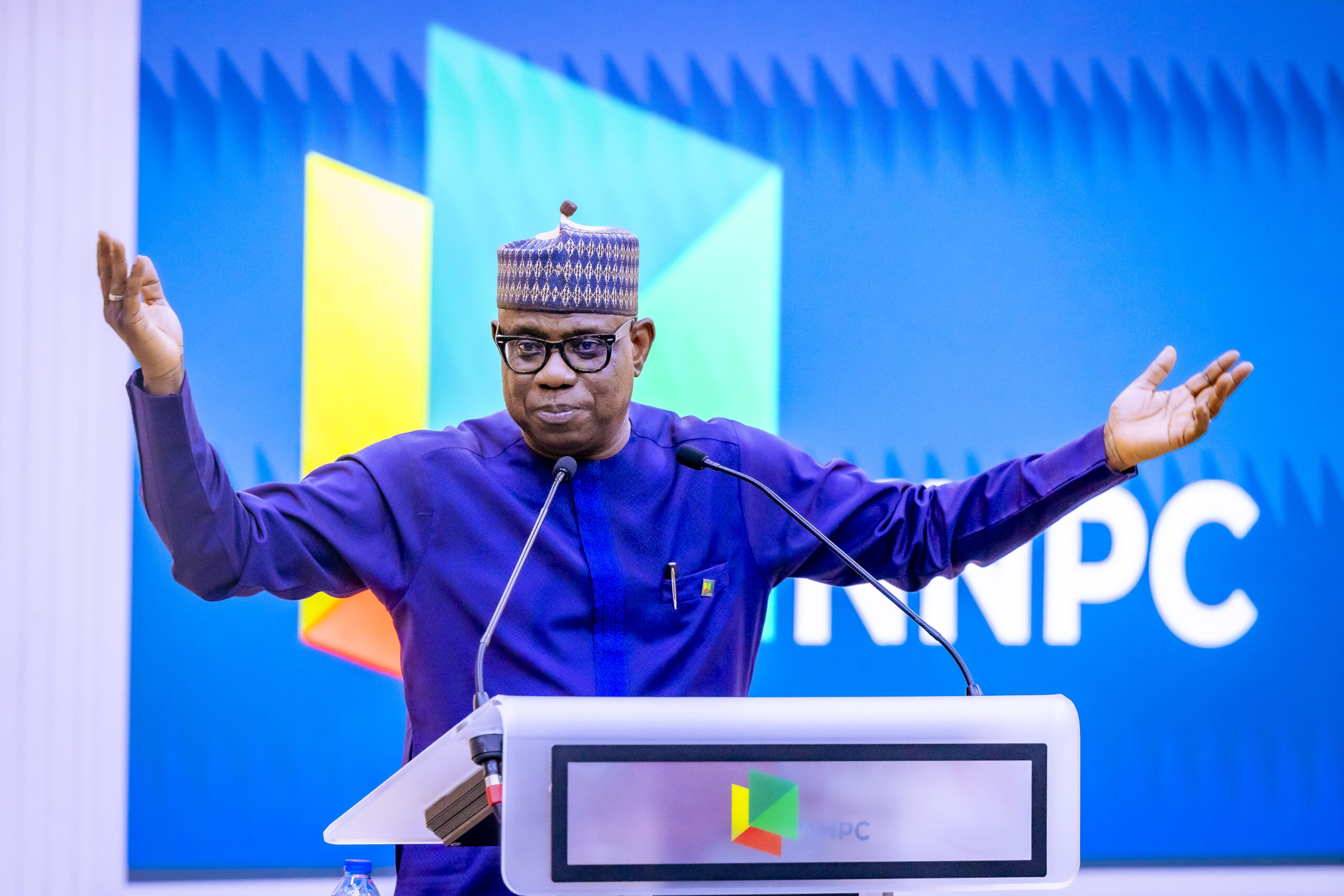
Nigeria’s state-owned refineries were operating at what he called a “monumental loss,” according to Bayo Ojulari, Group Chief Executive Officer of the Nigerian National Petroleum Company Limited (NNPCL). This forced his management team to halt operations in order to prevent additional financial harm to the nation.
In a rare and direct assessment of the operational and commercial reality of the country’s refining assets, Ojulari made the revelation on Wednesday in Abuja at a fireside discussion titled “Securing Nigeria’s Energy Future” at the Nigeria International Energy Summit 2026.
The head of NNPC acknowledged the general public’s dissatisfaction with the refineries, pointing out that Nigerians had every right to be angry given the substantial sums of public money that had been invested over the years.
Nigerians were upset on the refineries. Expectations were very high, and a lot of money has been invested. Accordingly, we were under tremendous pressure,” he stated.
According to reports, Nigeria’s four state-owned refineries—Port Harcourt (two plants), Warri, and Kaduna—have spent billions of dollars on turnaround maintenance and rehabilitation over the years, but they have mostly failed to produce consistently.
“I had to pick things up quickly.”
Ojulari acknowledged that, having worked in the upstream oil industry for the majority of his career, refining was not his specialty when he took government.
I was on a steep learning curve because of my upstream background. You have to pick things up fast since you are responsible. There’s no way out else,” he stated.
Once his crew had settled down, he said, accountability required a quick and honest evaluation of the refineries.
“We Were Running At A Monumental Loss,” Ojulari stated, adding that a thorough operational assessment nearly instantly revealed the refineries’ actual financial situation.
“The first thing that became evident—and I want to make this very clear—was that we were losing badly to Nigeria. All we were doing was squandering cash. “I can now say that with confidence,” he said.
He clarified that although NNPC supplied crude oil cargoes to the refineries on a monthly basis, utilization only amounted to 50–55 percent, which led to significant value loss.
“We were spending a lot of money on contractors and operations. However, if you look at the internet, we were simply losing value,” he remarked.
Ojulari stated that the lack of a viable strategy to undo the losses was more concerning.
“Investing can occasionally result in a loss, but there is a path to recovery. He observed, “That line of sight was not clear here.”
He said that ongoing operations were not economically justified due to this lack of understanding.
One of the first significant actions his administration took, according to Ojulari, was to stop refinery operations.
We made the decision to halt the refinery and conduct a brief inspection. We intended to reopen and work on them if everything lined up,” he stated.
He claimed that in order to stop additional losses and reevaluate the plants’ sustainability, they had to be closed.
Citing the Port Harcourt Refinery as an example, the NNPC chairman further revealed that a portion of the losses were caused by the quality of the goods being produced.
“Mid-grade products were being produced from the crude we were transporting into Port Harcourt.” “It was a waste when you add up their value in relation to what you put in,” he stated.
Given the ongoing pressure on NNPC to maintain refineries in order to guarantee petroleum supply, Ojulari admitted that the decision to stop operations was politically delicate.
“There was a lot of political pressure to maintain the refinery product. However, you can’t sleep with it after being taught for more than 35 years to prioritize commerciality and profitability,” he remarked.
For many years, Nigeria’s refineries have run much below capacity, occasionally operating at single-digit utilization or ceasing operations completely. Due to this, the biggest oil producer in Africa is now mostly dependent on imported refined petroleum products.
Subsequent administrations approved several billion-dollar rehabilitation contracts between 2015 and 2023, but domestic refining production remained low, raising public concerns about NNPC’s effectiveness.
Ojulari’s comments are among the most direct acknowledgements made by a NNPC CEO that refinery operations were not economically viable under the current circumstances. The remarks highlight a larger movement within NNPC to enforce business discipline, especially in politically delicate sectors like domestic refining, in accordance with the Petroleum Industry Act.
