
Oshiomhole Vows to Celebrate Tonight Following Farouk, Komolafe’s Resignation from NMDPRA, NUPRC

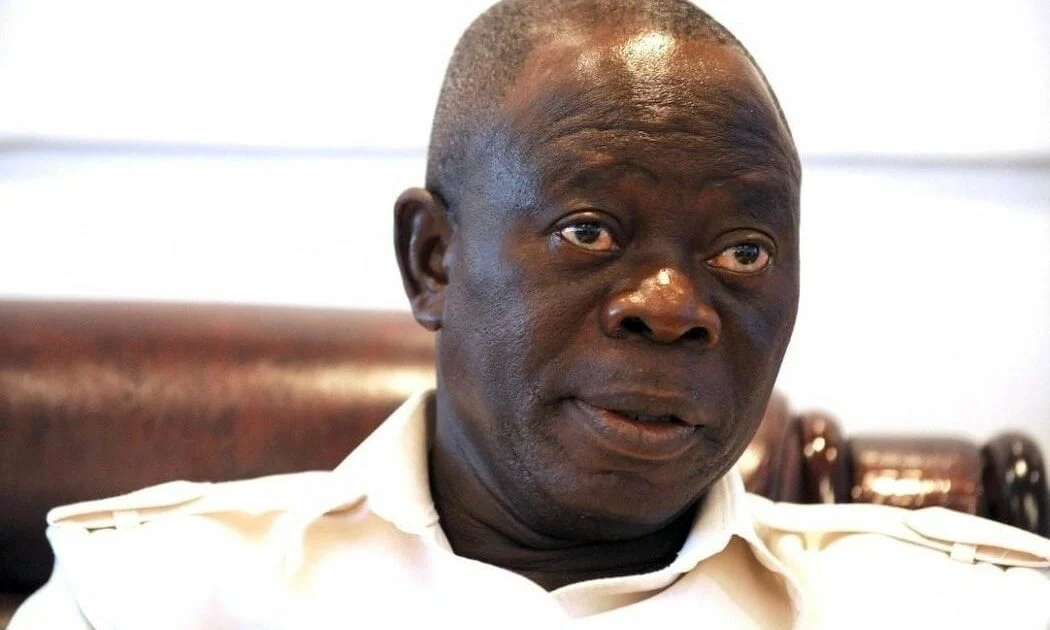
Adams Oshiomhole, a former governor of Edo State and senator from Edo North, has stated that he applauded the resignations of Gbenga Komolafe and Engineer Farouk Ahmed from Nigeria’s petroleum regulatory body, stating that their departure was essential to the nation’s economic survival.
According to reports, Oshiomhole made the comments on Thursday as President Bola Ahmed Tinubu was vetting candidates for top roles in Nigeria’s petroleum regulatory bodies.
The Joint Committee on Upstream, Midstream, Downstream, and Gas carried out the screening.
President Tinubu had forwarded the names of Oritsemeyiwa Amanorisewo Eyesan as Chief Executive Officer of the Nigerian Upstream Petroleum Regulatory Commission and Engineer Saidu Aliyu Mohammed as Chief Executive Officer of the Nigerian Midstream and Downstream Petroleum Regulatory Authority to the Senate for confirmation.
The appointments followed the resignations of Engineer Farouk Ahmed, former NMDPRA chief, and Mr. Gbenga Komolafe, former NUPRC chief, both appointed in 2021 under the Petroleum Industry Act.
The leadership shake-up came after a public dispute between Ahmed and the President of Dangote Group, Alhaji Aliko Dangote.
Dangote had accused the NMDPRA of frustrating domestic refining through the issuance of petroleum import licences and also raised allegations of personal corruption against the former regulator.
Speaking during the screening, Oshiomhole criticised what he described as “shameful policy choices” of the outgoing leadership.
“I celebrated it last night,” Oshiomhole said. “It needed to be done. And I’m still going to drink tonight because of their removal.”
While acknowledging the professional credentials of Mohammed, Oshiomhole said the core problem was not competence but policy direction.
“Looking at your CV, you are qualified. But the issue for me is not qualification. It is your policy choices,” he said.
The former labour leader stressed that countries deliberately protect local industries to create jobs.
“Everywhere in the world, nation-states deliberately protect local industries, not because they like the owners, but because they want to create jobs,” he said.
According to him, job creation would not come from sympathy but from deliberate support for labour-intensive industries such as refineries.
“Jobs will not be achieved by weeping for the jobless. It is by supporting businesses, particularly manufacturers like refineries,” Oshiomhole added.
Oshiomhole lamented that despite the issuance of several refinery licences over the years, policies under the previous leadership encouraged importation and weakened domestic refining.
He said local refinery assets were “deliberately stifled” under the watch of the former regulators, describing the situation as contrary to Nigeria’s national interest.
“Anyone who is opposed to jobs being created in Nigeria, who prefers importation, importing products here and exporting our wealth abroad, has no business managing this sector,” he said.
Oshiomhole urged the new nominees to be guided by national interest rather than commercial convenience.
“Be guided by what is good for Nigeria, not by the interests of refinery owners alone,” he said. “The people who work there are our brothers, our sisters, our children.”
Additionally, he praised President Bola Ahmed Tinubu for what he called “decisive action” in dismissing the former officials, claiming that the move had given Nigerians who rely on the industry for employment and economic stability fresh hope.
During the meeting, Taraba South senator David Jimkuta sided with Oshiomhole.
He asked the nominees pointed questions and jokingly pledged to join Oshiomhole in celebrating the resignations.
“I want you to be very clear with us: what will you tell my kids?” Jimkuta inquired. “What are you going to do differently? What specifically do you think is wrong with the current system, and how do you plan to change the mindset and perceptions that Nigerians have developed?
