
Tinubu Hails ₦100tr Equities Market Milestone, Calls for Increased Local Investment

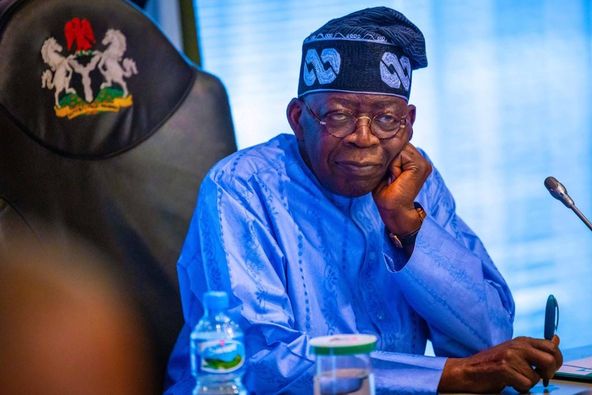
President Bola Ahmed Tinubu has lauded corporate Nigeria, investors, and key stakeholders in the capital market for driving the Nigerian Exchange Group (NGX) past the historic ₦100 trillion market capitalisation milestone, describing the achievement as a strong signal of renewed confidence in the Nigerian economy.
In a statement released in Abuja on Thursday by his Special Adviser on Information and Strategy, Bayo Onanuga, the President said the record-breaking performance of the equities market reflects the impact of ongoing economic reforms and the growing resilience of Nigeria’s financial system.
President Tinubu urged Nigerians, institutional investors, and the business community to deepen their investments within the domestic economy, assuring that 2026 will deliver even stronger returns as reform measures continue to stabilise key macroeconomic indicators.
“With the Nigerian Exchange crossing the historic ₦100 trillion market capitalisation mark, Nigeria is witnessing the birth of a new economic reality,” Tinubu said. “This milestone signals rejuvenation, renewed confidence, and the emergence of Nigeria as a compelling destination for value-driven investments.”
NGX Outperforms Global Peers
The President noted that while many global markets struggled with stagnation and weak recoveries in 2025, Nigeria’s equities market recorded remarkable growth. According to him, the NGX All-Share Index closed 2025 with a 51.19 per cent return, significantly higher than the 37.65 per cent recorded in 2024.
He added that the market’s performance ranks among the strongest globally, outperforming major indices such as the S&P 500, FTSE 100, and several emerging markets within the BRICS+ bloc.
“Nigeria is no longer a frontier market to be overlooked,” Tinubu said. “It is now a market where value is being discovered, confidence is returning, and long-term growth prospects are becoming clearer.”
Strong Corporate Performance and New Listings
President Tinubu highlighted impressive performances by listed companies across key sectors of the economy. He pointed to industrial firms that have successfully localised their supply chains, as well as a banking sector that has demonstrated resilience, innovation, and strong regulatory compliance.
He also disclosed that the pipeline for new listings on the NGX remains robust, with indigenous energy companies, technology firms, telecommunications operators, and infrastructure-focused enterprises preparing to access the capital market to fund expansion.
“As more Nigerian-owned companies list on the Exchange, market capitalisation will continue to rise, while democratic ownership of the economy deepens,” the President said.
Inflation Eases, Naira Stabilises
Beyond stock market gains, Tinubu said the government’s reforms are producing tangible macroeconomic improvements. He noted that inflation has begun a sustained decline following decisive monetary tightening, the elimination of distortionary “Ways and Means” financing, and increased investments in agriculture.
According to him, inflation fell from a 24-month high of 34.8 per cent in December 2024 to 14.45 per cent in November 2025, with projections showing it could reach 12 per cent in 2026 and potentially drop below 10 per cent before the end of the year.
He added that these developments are helping to stabilise the naira, reduce speculative pressures, and improve purchasing power over time.
Trade, Reserves, and External Balance
The President also highlighted Nigeria’s improving external position, revealing that the country recorded a $16 billion current account surplus in 2024. Projections from the Central Bank of Nigeria (CBN), he said, indicate the surplus could rise to $18.81 billion in 2026, up from $16.94 billion in 2025.
Non-oil exports, Tinubu noted, surged by 48 per cent by the third quarter of 2025 to ₦9.2 trillion, while exports to African markets rose by 97 per cent to ₦4.9 trillion. Manufacturing exports also increased by 67 per cent year-on-year in the second quarter of 2025.
Nigeria’s foreign reserves have crossed $45 billion, providing the Central Bank with greater capacity to defend currency stability. Projections indicate reserves could exceed $50 billion in the first quarter of 2026.
Infrastructure and Social Investments
President Tinubu further cited progress in infrastructure development, including the expansion of rail networks, completion of major arterial roads, and ongoing revitalisation of Nigeria’s ports. He referenced flagship projects such as the Lagos–Calabar Coastal Highway and the Sokoto–Badagry Superhighway as critical to unlocking long-term economic growth.
He also noted improvements in healthcare delivery, declining medical tourism costs, expanded access to education loans through the Nigeria Education Loan Fund (NELFUND), and increased research funding for tertiary institutions.
Commitment to Growth and Reform
“Nation-building is a process, not a destination,” the President said. “Hard work, sacrifice, and collective focus are required to build a prosperous nation. The ₦100 trillion market capitalisation milestone sends a strong message to the world that Nigeria’s economy is productive, resilient, and open for business.”
Tinubu reaffirmed his administration’s commitment to building a transparent, inclusive, and high-growth economy, driven by historic tax and fiscal reforms that took full effect from January 1.
