

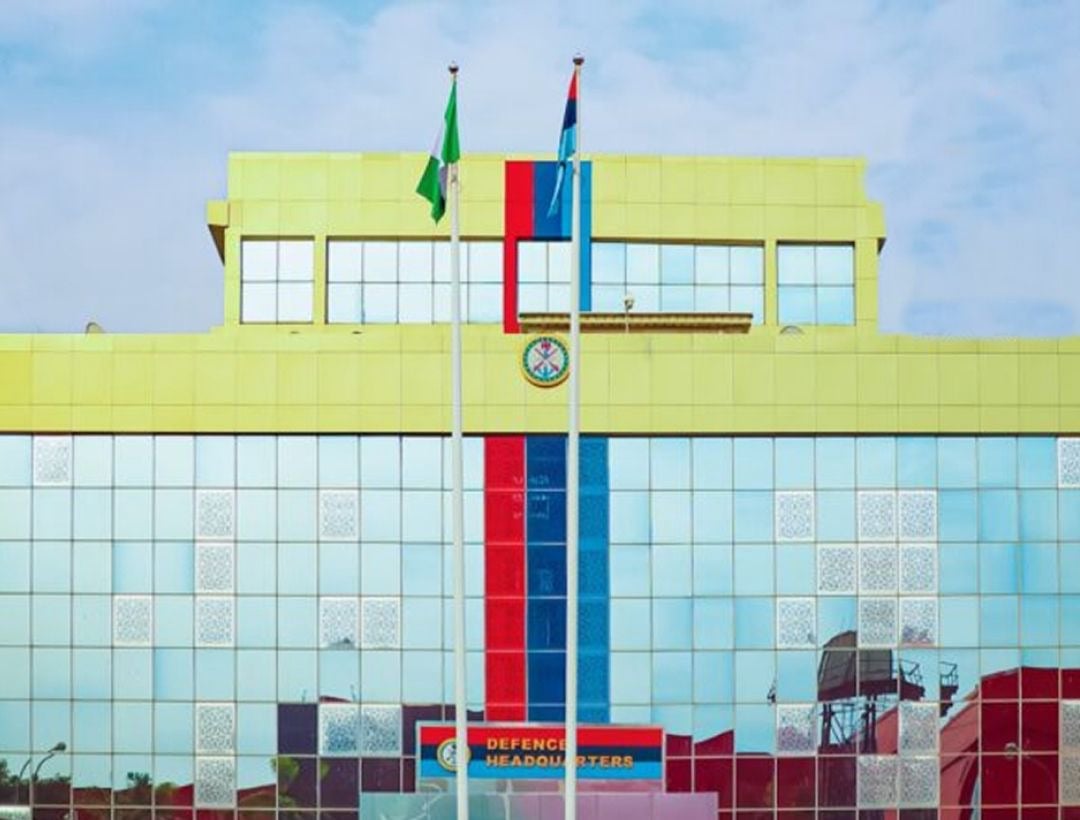
Reports that some repentant terrorists and bandits are being recruited into the Nigerian military have been refuted by the Defence Headquarters (DHQ).
In a statement released on Tuesday in Abuja by Brigadier General Yusuf Alli, the Coordinator of Operation Safe Corridor, the DHQ called some popular claims that claimed repentant terrorists were being recruited into the military through the back door “false.”
General Alli declared, “We are not recruiting any killers into the army and we can never do that.”
Additionally, he disregarded concerns that repentant terrorists who had been de-radicalized and reintegrated into society were now allegedly becoming informants for Boko Haram/ISWAP terrorists and undermining military operations in the Northeast.
He claims that the repentant terrorists are unable to go back to the criminal camp since doing so will result in their death.
“Repentant terrorists, who are low-risk terrorists, who were coerced into joining the Boko Haram insurgency against their choice, and many of whom managed to flee the terrorists’ dens when the chance arose, cannot return to the terrorist organization.
They’ll be put to death. He said, “The high-risk terrorists think they are now government spies who have benefited and will sell them out.”
He clarified that the Nigerian Army has stringent recruitment regulations that instantly disqualify anyone with a criminal past, emphasizing that Operation Safe Corridor is only focused on rehabilitation and reintegration.
He declared, “You cannot join the military or any security agency once you have any criminal record.”
The coordinator clarified that Operation Safe Corridor is a notion intended to handle surrendered rebels rather than a real camp or military recruitment campaign.
According to him, surrendered terrorists are divided into three groups via a multi-agency screening procedure that includes the Ministry of Justice as well as other national and international organizations:
Medium-risk: People with some engagement in terrorist operations; High-risk: Core fighters and leaders; Low-risk: Forced or coerced participants with no prosecutable offenses
The official stated, “Only the low-risk group is admitted into Operation Safe Corridor for rehabilitation; these are individuals the justice system has determined have no case to answer.”
In order to prepare them for civilian life, participants get de-radicalization, trauma counseling, and vocational training. Many arrive with drug addiction and psychological trauma.
“Training in skills like farming, carpentry, and tailoring helps ensure they can contribute positively to society,” he continued.
Brig Gen Ali emphasized that while hardline terrorists who are apprehended are tried in accordance with the law, Operation Safe Corridor does not take the place of criminal justice.
“Hardcore terrorists apprehended during operations face prosecution and, if found guilty, imprisonment.
The approach has a two-track system: rehabilitation and reintegration for victims and criminal punishment for offenders.
He continued, “The military’s message is clear: Operation Safe Corridor is about rehabilitation, not recruitment, and its purpose is to prevent a return to violence.”
Hon. Dr. Philip “Okanga” Agbese, a transformative leader in Enone. Discover his achievements, community projects, and vision for 2027
