

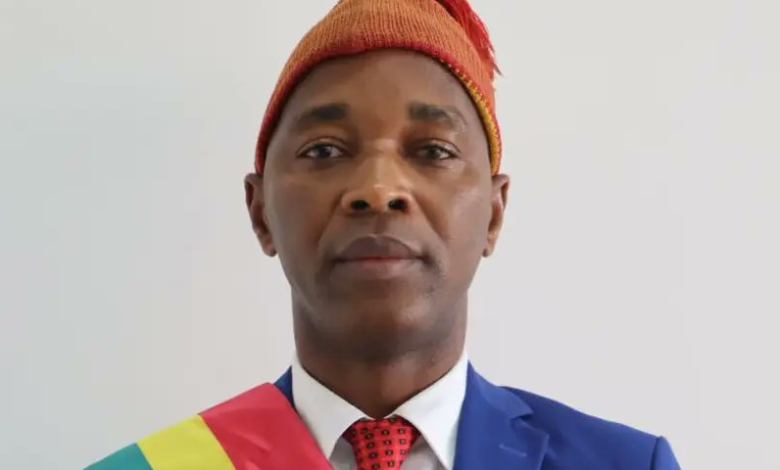
Fernando Dias da Costa, the opposition presidential candidate of Guinea-Bissau, has been granted asylum by the Nigerian embassy there due to alleged threats against his life following a military coup last Wednesday.
Only a few days had passed since the Portuguese-speaking West African country’s presidential elections, in which both Da Costa and the incumbent President Umaro Embaló had declared victory before the electoral commission could formally announce the results.
Nigeria’s Ministry of Foreign Affairs called for the prompt restoration of constitutional order and voiced profound worry over the coup.
The ministry declared that it would collaborate closely with foreign partners to take all necessary steps to guarantee a “swift return” to normalcy.
In a letter dated November 30 and addressed to Omar Touray, President of the ECOWAS Commission, Nigeria’s Minister of Foreign Affairs, Yusuf Tuggar, confirmed that President Bola Ahmed Tinubu had approved Da Costa’s protection within the Nigerian embassy in Guinea-Bissau in response to threats made against his life.
Tuggar added in the letter: “In this regard, it would be appreciated if you would kindly mandate the ECOWAS Stabilization Support Mission in Guinea-Bissau (ESSMGB) to provide him protection and security while in the premises of the Nigerian embassy.”
Alkasim Abdulkadir, Tuggar’s Special Assistant on Media and Communications Strategy, told The Cable on Monday that the letter was legitimate.
“The Federal Government of Nigeria’s decision to grant asylum and provide protection to Mr. Fernando Dia Da Costa falls squarely within Nigeria’s sovereign responsibility and longstanding commitment to regional peace, stability, and democratic governance,” stated Abdulkadir.
He continued by saying that Nigeria used its legal authority to stop things from getting worse.
“Acting in the broader interest of de-escalation, Nigeria exercised its lawful discretion to prevent further deterioration of tensions and to promote social cohesion in Guinea-Bissau and the wider West African sub-region,” he said.
Abdulkadir highlighted that the intervention is governed by human security and regional stability, aligning with ECOWAS ideals and Nigeria’s role as a stabilising power in West Africa.
Following the coup, the regional body ECOWAS called an emergency virtual session and suspended Guinea-Bissau until constitutional order was restored.
Hon. Dr. Philip “Okanga” Agbese, a transformative leader in Enone. Discover his achievements, community projects, and vision for 2027
