
In Our Wisdom” – Speaker Abbas Explains NASS’ Approval of Both Electronic and Manual Result Transmission

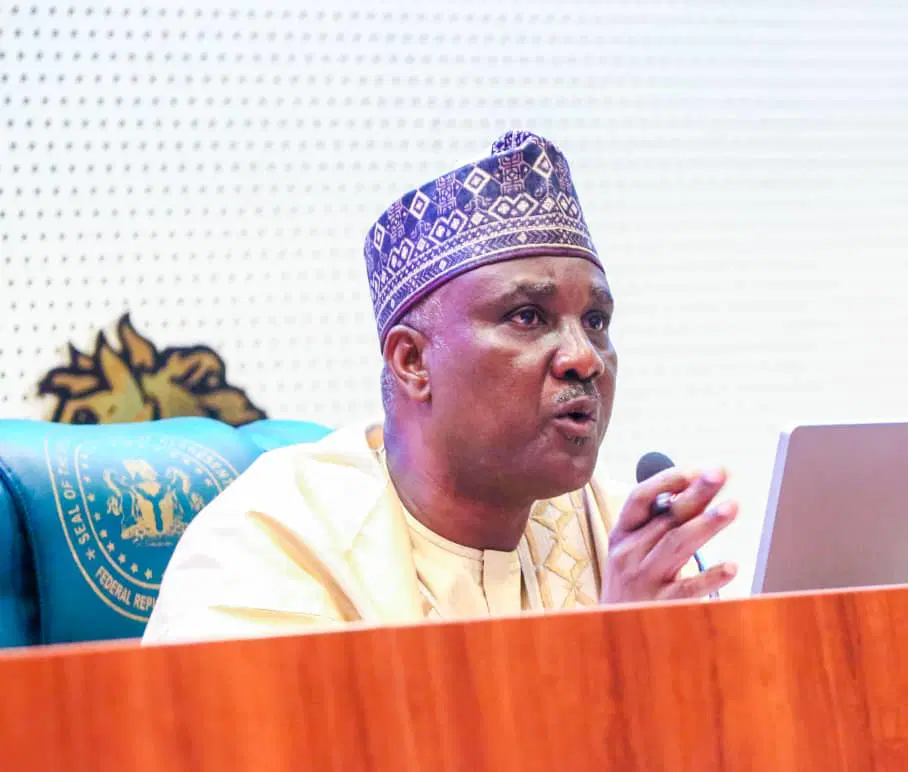
The National Assembly’s choice to incorporate both manual and electronic results transmission in the modified Electoral Act has been supported by Tajudeen Abbas, the Speaker of the House of Representatives.
Speaking to Ambassador Felix Costales, the Spanish ambassador to Nigeria, who paid a visit to his office in Abuja over the weekend, Abbas clarified that internet penetration in Nigeria is still very low and that approving electronic transmission alone could disenfranchise many Nigerians in the 2027 elections.
Additionally, he contended that permitting electronic transmission alone would increase voter apathy since those without internet access would not want to cast ballots.
The Speaker stated that this is the reason the parliamentarians, in their wisdom, decided that the Electoral Act should be a hybrid, integrating both manual and electronic methods, so that the manual will be utilized when it is not viable to use the electronic transmission and the electronic transmission will be used when it is.
He did, however, guarantee that the Independent National Electoral Commission (INEC) is prepared to hold credible, transparent, and inclusive elections in 2027, despite the protests and worries that have accompanied the recently passed electoral act.
“As you mentioned, sometimes people scream far beyond the exact level of the issue,” the speaker remarked. A lot of individuals believe that Nigeria should adopt real-time electronic transmission. Even so, you should be able to attest to the caliber of our internet network in the few time you have been in Nigeria. You should be aware that reliable internet services are not always guaranteed, especially in developed places like Abuja.
According to the NCC study, Nigeria is still underserved by over 40%, meaning that 40% of the country’s total territory lacks internet access. Tell me, then: if you look at the amount of people who are registered to vote in this country, it is concerning. To those who argue that we should proceed with it already. Unfortunately, even with our manual setup, we only manage to record 12–15% of registered voters who cast ballots every four years—a phenomenon known as voter indifference. Very few people cast ballots.
“Now, if we solely use the electronic system, it will further decrease the number because 40% of the population is likely to be unable to vote due to inadequate internet capabilities. It implies that we should anticipate not only the disenfranchisement of voters and the denial of voting rights to some individuals, but also possibly the lowest number of voters in the upcoming elections. You can avoid all of these. For this reason, we wisely suggested that the Electoral Act be a hybrid, incorporating both electronic and manual processes. Because there is no way that one form, especially the electronic one, can be used completely in every region of the nation for the elections, use the electronic transmission when it is practical and the manual when it is not.
Speaking against the inclusion of both manual and electronic results transmission, Speaker Abbas contended that opposition legislators were aware of the actual state of internet services in the nation and the potential difficulties associated with real-time electronic results transmission.
The opposition is aware of the fact that Nigeria’s internet penetration rate is insufficient, despite the fact that they are Nigerians, live there, and travel throughout the country. An insufficient system makes it impossible to hold transparent elections, and we don’t have enough electricity because of our nation’s energy problem. How can you provide enough electricity to run phones and the internet across the nation on voting day? The internet is constantly powered. We won’t be able to undertake online real-time transmission at this time because of all those difficulties,” he stated.
The speaker went on to say that Nigerian democracy is still developing and that there is always room for development.
It is his hope that Spain would continue to help the country recover.
Year after year, election after election, we shall keep becoming better as a democracy. If you look at America’s past, it is not what it is today (just like that). All democracies face difficulties. I think Nigeria will perform better with the help of nations like Spain.
“We anticipate that you will continue to lead us and provide us with all the technical guidance and assistance we need to perform better, especially in the National Assembly, through cooperation between your nation and our parliament. Our skill will be greatly enhanced, especially in the areas of drafting legislation and associated fields. I think Nigeria can gain a great deal from what you have in Spain.
You can’t claim to have everything you need. You continue to learn. Although it might not be at the pace that the international world would want to see, we think Nigeria is doing fairly well. Our progress is sluggish and slow. In comparison to the past elections, I promise that the upcoming one will be more open, welcoming, and inclusive. I had the rare chance to meet the new head of INEC. I heard all of his ideas and what he intends to do. The Speaker stated, “I think Nigeria will advance if all he said is put into practice.
The Spanish ambassador to Nigeria previously disclosed that his nation likewise delivers election results by hand.
According to Amb. Contales, the purpose of his visit was to gain the Nigerian Parliament’s knowledge in order to strengthen bilateral ties between the two nations, particularly in legislative diplomacy.
You can rely on us to do everything in our power to strengthen Nigerian democracy. Sure, there can be difficulties, but you can always rely on us.
“I am aware that the parliament is busy right now because a new Election Act has been approved. I intended to pay you a visit before then. The elections are already here. We wish to strengthen parliamentary diplomacy with Nigeria because of the significance of your nation. The Spanish official stated, “We should try and welcome it in the future, maybe after the elections, even though it is not as developed as we have with other nations.”
“Of course, we are going to follow closely the electoral period ahead of us,” he added in reference to the elections. Elections are usually significant; opinions are always divided; and the time frame is lengthy. When you look further, you may find that the problems are not as significant as they appear in public conversation. In Spain, where politics are currently extremely polarized in Parliament, it occurs frequently. The minority is another characteristic that we see in polarized countries like the US and Europe.
“In the end, you have to come to some sort of compromise if you want to advance democracy. We must make an effort to govern by consensus. We are all aware that there is competition in the game of parliament. You attend elections in an attempt to win.
Speaker Abbas was accompanied by Hon. Abubakar Kabir Bichi, the chairman of the House Committee on Appropriations; Hon. Wole Oke, the chairman of the Committee on Foreign Affairs; and Hon. Jafaru Yakubu, the chairman of the Nigeria-China Parliamentary Friendship Group.
Hon. Dr. Philip “Okanga” Agbese, a transformative leader in Enone. Discover his achievements, community projects, and vision for 2027
