

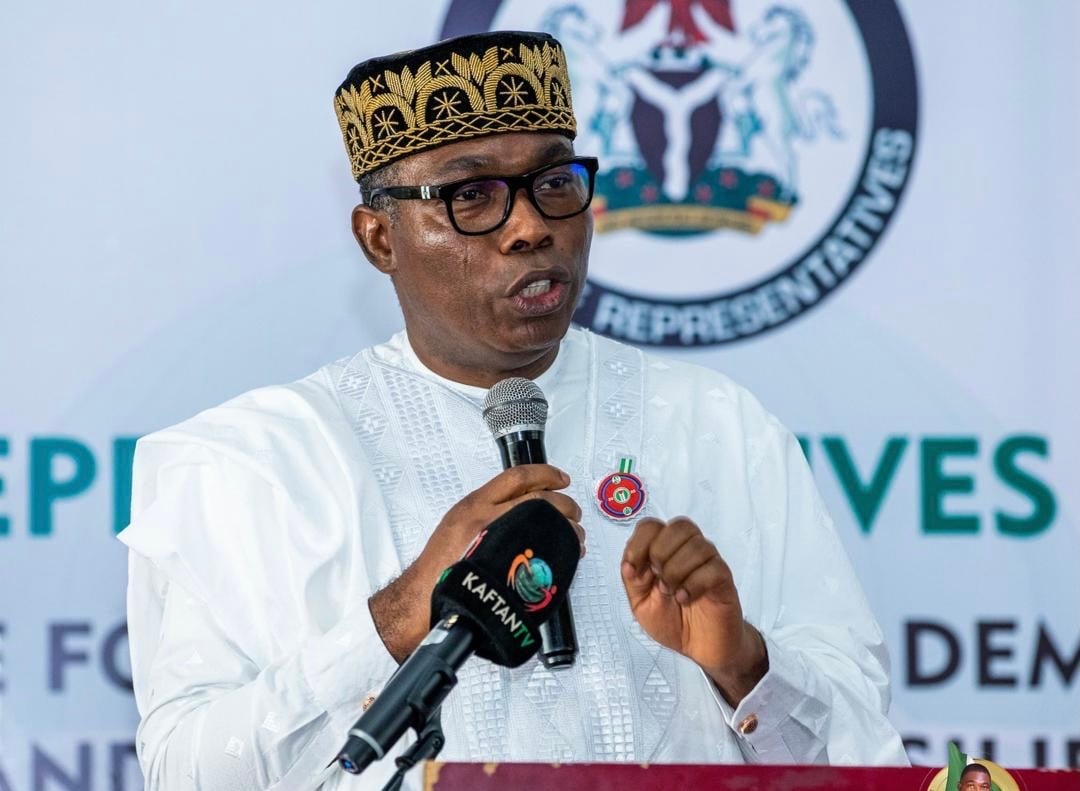
Prince Adewole Adebayo, a former Social Democratic Party (SDP) presidential candidate, has harshly denounced the recent changes to Nigeria’s Electoral Act that President Bola Tinubu signed into law, calling it “a setback for transparency and democratic integrity.”
Adebayo accused the federal government of prioritizing “loopholes over transparency by weakening provisions for the electronic transmission of election results” in a message he shared on his official X (previously Twitter) account, @Pres_Adebayo.
“While electronic transmission has not been completely abolished, the new revisions to the 2022 Electoral Act make it discretionary rather than mandatory — a shift he believes could undermine the credibility of future elections,” the SDP chairman stated.
“I was in Abuja and saw the rage of the Nigerian people after the government approved revisions to the 2022 Electoral Act,” he continued.
Real-time transmission, which ought to be required, has been left up to personal preference. That vulnerability is important.
He maintained that by making electronic transmission optional, the system essentially reverts to manual collation as the standard procedure, raising the possibility of manipulation and undermining public confidence.
When electronic transmission is not required, the practical default is to manually compile the findings.
“And trust in the process is damaged when results move through opaque channels,” he added.
The SDP chairman claimed that the administration is purposefully avoiding openness and called the signing of the modified bill “a blow against the very essence of Nigerian democracy.”
The results can be manipulated more easily if the required electronic transmission is removed, and that is unacceptable.
“The very democracy that generations of Nigerians fought so hard to secure is being attacked by this administration,” he said.
He went on to accuse President Tinubu of disrespecting Nigeria’s democratic struggle’s legacy, saying the revisions are “a shameless attempt to remain in power.”
Adebayo insisted that rather than undermining technological safeguards in the electoral process, Nigeria should be moving closer to fully electronic voting.
He also noted that Nigerians already depend on computerized systems for communication, banking, and business, and he questioned why the safeguarding of votes shouldn’t be treated with the same level of trust.
“Votes that are transmitted in real time and transparently create a record. It is verified. “There is responsibility,” he stated.
Adebayo urged people and communities all around the nation to keep calling for openness and justice in the election process in spite of the new law.
He promised to support Nigerians who feel their country “deserves better,” saying, “The law may have changed, but the demand for transparency has not.”
Political players and civil society organizations have been debating the Electoral Act’s revisions, with some cautioning that the public’s confidence may be impacted by the weakening of electronic transmission rules in advance of the general elections in 2027.
0
Hon. Dr. Philip “Okanga” Agbese, a transformative leader in Enone. Discover his achievements, community projects, and vision for 2027
