

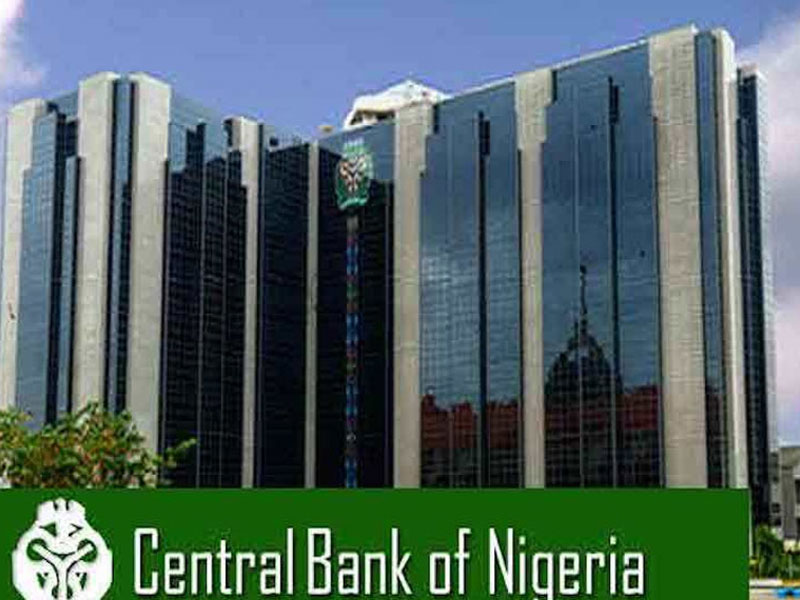
With the addition of ethically sourced gold refined to London Bullion Market Association (LBMA) Good Delivery standards, the Central Bank of Nigeria (CBN) increased its foreign reserves to $3.5 billion.
In addition to calling for stricter legal and enforcement measures to stop the growing number of Ponzi scams in Nigeria, the Senate yesterday sought to reposition the CBN as the coordinating body for the regulation of the country’s rapidly growing fintech industry.
The change in foreign reserves highlights the central bank’s continuous efforts to improve financial stability and diversify its reserve portfolio.
According to a statement released yesterday, Mr. Olayemi Cardoso, the governor of the Central Bank of Nigeria (CBN), revealed this during a one-day workshop on “Strategies to Maximise the Economic Benefits of Minerals in Nigeria.”
Under the National Gold Purchase Programme (NGPP), the Solid Minerals Development Fund (SMDF) collected the gold, which was obtained domestically.
The program uses local miners and complies with globally accepted responsible sourcing guidelines, such as the London Principles of the World Gold Council and the Due Diligence Guidelines of the Organization for Economic Co-operation and Development (OECD).
Cardoso also revealed that the CBN purchased the monetary-grade gold in Naira at a price based on LBMA benchmarks, a mechanism intended to protect Nigeria’s foreign exchange assets while bolstering the country’s gold reserves.
He claimed that the deal improves reserve accretion and advances more general macroeconomic stability goals by buying domestically refined gold without using foreign currency.
Cardoso also emphasized significant changes in international reserve management tactics, pointing out their growing significance in the face of escalating economic uncertainty.
According to him, the incident is a reflection of Nigeria’s collective dedication to the strategic and prudent management of its mineral resources. He emphasized that the workshop highlighted the country’s preparedness to adjust to the realities of a changing global economy, where wise governance, resilience, and diversification have become increasingly important.
He went on to say that the purpose of the meeting, which was organized by the Reserve Management and Corporate Secretariat departments of the CBN, was to deepen understanding of the opportunities, challenges, and current state of the gold industry throughout its value chain.
“Central banks around the world are prioritizing economic resilience amid persistent geopolitical and market uncertainties,” he continued.
He claimed that while other essential commodities are increasingly influencing global supply chains and sophisticated industrial development, gold has regained significance as a hedge against inflation and volatility.
Cardoso emphasized that only caution, strategic collaboration, and long-term planning could fully realize Nigeria’s enormous potential in terms of natural and human resources.
He emphasized the necessity of rigorous adherence to globally accepted standards, emphasizing that robust governance structures are essential to institutional credibility.
The successful delivery of LBMA standard gold, according to Hajiya Fatima Umaru Shinkafi, Executive Secretary of the Solid Minerals Development Fund (SMDF), shows the effectiveness of the organization’s formalization structure and supply chain due diligence procedures.
Ms. Kurtulus Taskale Diamondopoulos, Director of Central Banks and Public Policy at the World Gold Council, praised the CBN and SMDF for creating the Nigerian Gold Purchase Programme (NGPP) in accordance with the twelve London Principles for ethical artisanal and small-scale gold sourcing.
She pointed out that the collaboration between the SMDF as fiscal and supply chain manager and the CBN as single off-taker provides a solid blueprint for other nations looking to bolster comparable initiatives.
Mr. Samaila Zubairu, President and CEO of the Africa Finance Corporation (AFC), reiterated AFC’s commitment to funding and formalizing Nigeria’s mineral industry, emphasizing the significance of precise data and mineral processing infrastructure to draw investment, enhance gold recovery, lessen environmental impact, and facilitate central bank purchases.
Speaking as well, Ms. Nere Emiko, Executive Vice Chairman of Kian Smith Gold Company, emphasized the critical need for Nigeria to develop strategic gold reserves and use commodity exchanges. She called for increased investment in exploration and transparency and pointed out the nation’s low reserve levels in comparison to peers.
Emiko went on to say that the Central Bank’s larger plan to improve reserve quality, lessen external vulnerabilities, and establish Nigeria’s mineral riches as a cornerstone of long-term economic stability includes the Domestic Gold Purchase Program.
The Senate orders a crackdown on Ponzi schemes and moves to make CBN the primary fintech regulator.
In the meantime, the Senate moved yesterday to reestablish the CBN as the coordinating body for the regulation of Nigeria’s rapidly growing fintech industry while also calling for stricter laws and enforcement actions to stop the nation’s Ponzi scheme epidemic.
During a one-day public hearing held at the National Assembly to examine the Banks and Other Financial Institutions Act (Amendment) Bill 2025 (SB. 959) and to look into the activities of fraudulent investment platforms, specifically in relation to the recent Crypto Bullion Exchange (CBEX) incident, the twin resolutions were presented.
The Senate Committees on Banking, Insurance and Other Financial Institutions; ICT and Cyber Security; Capital Market; and Anti-Corruption and Financial Crimes jointly organized the hearing, which demonstrated lawmakers’ resolve to strengthen Nigeria’s financial regulatory framework in the face of the country’s swift digital transformation and growing financial fraud.
The amendment bill aims to strengthen the current provisions of the Banks and Other Financial Institutions Act (BOFIA) 2020 by specifically bringing technology-enabled financial service providers under clearer statutory supervision, according to Senator Mukhail Adetokunbo Abiru, chairman of the Senate Committee on Banking, Insurance, and Other Financial Institutions.
According to Abiru, the legal and regulatory framework has not kept up with the growth and systemic significance of fintech companies, such as mobile money operators, digital lenders, payment platforms, and settlement firms, which have greatly increased financial inclusion and currently serve millions of Nigerians.
He claims that the existing system for identifying Systemically Important Financial Institutions is still primarily bank-focused and does not sufficiently take into account the realities of big, data-driven, non-bank financial platforms.
He cautioned that financial stability, consumer protection, data sovereignty, and national security are all at risk due to this regulatory void.
According to him, the proposed amendment would give the CBN the authority to designate qualifying fintechs and digital financial institutions as Systemically Important Institutions, create a national registry to improve beneficial ownership disclosure and transparency, bolster risk-based supervision specific to technology-driven services, and foster systemic stability within the larger financial ecosystem.
Abiru vehemently disagreed with proposals from some quarters to establish a separate fintech regulatory body. He contended that the creation of a new organization would result in the duplication of current duties, bureaucratic overlap, higher administrative expenses, and the fragmentation of regulatory authority in an industry that requires coherence and coordination.
“Fintech regulation is closely linked to monetary policy, payments oversight, prudential supervision, Know-Your-Customer and Anti-Money Laundering enforcement, and systemic risk monitoring, functions that already reside within the Central Bank,” he stated.
A more cohesive policy pathway, he continued, would be to modernize the CBN’s supervisory powers and strengthen BOFIA while requiring organized cooperation with organizations like the Federal Ministry of Finance, the Office of the National Security Adviser, the Securities and Exchange Commission, the Nigerian Communications Commission, the National Information Technology Development Agency, the Federal Competition and Consumer Protection Commission, and the Corporate Affairs Commission.
The engagement was held in accordance with the Senate’s constitutional mission to protect the stability, integrity, and resilience of Nigeria’s financial system, according to Senate President Godswill Akpabio, who was represented at the hearing by Senate Leader Opeyemi Bamidele.
He referred to the financial system as the foundation of every contemporary economy, pointing out that it mobilizes savings, distributes credit, makes payments easier, encourages entrepreneurship, and propels economic progress when it is properly regulated and overseen.
Akpabio emphasized that the realities of contemporary finance, where innovation must function within precisely defined legal boundaries that ensure consumer protection, cybersecurity, operational resilience, and transparency, are reflected in the inclusion of technology-enabled financial service providers within an improved supervisory framework.
The Senate focused a lot of attention on Ponzi schemes and fraudulent digital investment platforms in addition to fintech regulation, characterizing them as a serious danger to economic stability and public trust.
At the event, lawmakers used the collapse of CBEX as a sobering reminder of the terrible human and financial costs associated with such schemes. Young professionals, retirees, traders, small business owners, and students all incurred significant losses as a result of being seduced by promises of unattainable profits, according to reports submitted before the hearing.
Beyond just causing personal suffering, the Senate cautioned that Ponzi schemes undermine confidence in reputable financial institutions, skew capital distribution, harm Nigeria’s financial standing, and increase vulnerability to money laundering and illegal financial flows.
According to Akpabio, the purpose of the investigation hearing was to determine if current laws sufficiently handle digital and cross-border financial crimes, identify regulatory and enforcement loopholes, and evaluate coordination among pertinent institutions.
The CBN, the Nigerian Deposit Insurance Corporation, the Federal Competition and Consumer Protection Commission, the Nigerian Communications Commission, the Economic and Financial Crimes Commission, the Ministry of Finance Incorporated, and the Chartered Institute of Bankers of Nigeria were among the stakeholders who presented arguments during the hearing.
Even though they suggested that some parts of the measure be changed before it was finally passed, they were all in favor of it.
In order to implement evidence-based changes that strengthen confidence in Nigeria’s banks, regulators, and financial markets, the Senate promised that all memoranda and suggestions will be thoroughly examined.
The Senate demonstrated its determination to fortify Nigeria’s financial system and shield individuals from exploitation in an increasingly digital economy by unifying fintech regulation under the CBN and tightening the grip on Ponzi operators.
Hon. Dr. Philip “Okanga” Agbese, a transformative leader in Enone. Discover his achievements, community projects, and vision for 2027
