

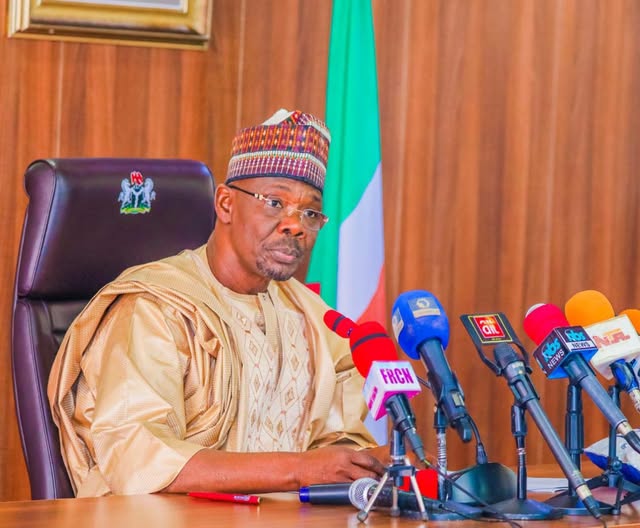
The ongoing political battle in Nasarawa State between Governor Abdullahi Sule and former governor Tanko Al-Makura is quickly turning into a liability for the APC’s wider fortunes, especially given Bola Ahmed Tinubu’s electoral strength in the state.
Stakeholders are becoming divided as a result of Sen. Almakura’s efforts to abandon the zoning formula that encourages peaceful cohabitation. By inciting internal divides and supporting internal conflicts, he has escalated his divisive rhetoric.
The incapacity of political heavyweights to balance legacy power with current authority is a well-known yet perilous tendency at the core of the problem. Due to his declining popularity in Nasarawa politics, Al-Makura, the former governor of the state who lost the Senate race, seems unable to face reality and make room for Sule, who now controls the government apparatus and the devotion that comes with incumbency. Although this conflict is common, it is being handled in a way that could cause the party’s base to become divided.
The persistent projection of parallel authority is one of Al-Makura’s most significant errors. Sule permitted his predecessor’s appointees to remain in office for continuity and a smooth transition, in contrast to other climes where incumbents upload their followers. Despite the fact that this could seem like his downfall, these appointees have now changed their allegiance to the Governor because of his genuine intentions. Al-makura fools himself into thinking he can hold onto party structures. He is unintentionally supporting opposing blocs in an effort to create the impression that the House is divided. As the Lord of the Manor, he has persisted in deceiving candidates. Such misdirected messages lead to uncertainty about direction and leadership, which frequently stifles voter enthusiasm.
The timing of these maneuvers is equally harmful. Internal strife at the state level sends the incorrect message, as national political considerations already lean toward consolidation ahead of upcoming elections. The continuous battle runs the risk of creating gaps that opposition groups could take advantage of rather than strengthening the APC’s hold over Nasarawa.
The issue of electoral repercussions is another. Tinubu’s vote bank has always benefited from Nasarawa’s support, but party leaders’ unity is crucial to maintaining stability. Ward and local government levels, where elections are frequently held, may be affected when powerful individuals are thought to be at odds with the governor. Disillusioned party members may quietly oppose mobilization attempts, defect, or disengage.
Furthermore, the story of cohesive government is undermined by the optics of elite conflict. Voters are more interested on concrete results than in former this and that. At a time when public expectations are high, prolonged infighting runs the risk of making the APC appear inward-looking.
Al-Makura’s perceived political status and his services to the state are further diminished by this. But his strategy seems more and more ineffective in the current situation. In politics, power involves timing, moderation, and strategic alignment in addition to retention.
President Bola Tinubu and the APC’s electoral power in this crucial North Central State of Nassarawa could be the true casualty if this trend continues.
The party’s greatest valuable political asset is still unity rather than rivalry.
Gov. Abdullahi Sule, the Chairman of the APC North Central Forum, continues to be the go-to person for organizing and delivering Nassarawa State and the North Central zone.
Hon. Dr. Philip “Okanga” Agbese, a transformative leader in Enone. Discover his achievements, community projects, and vision for 2027
