

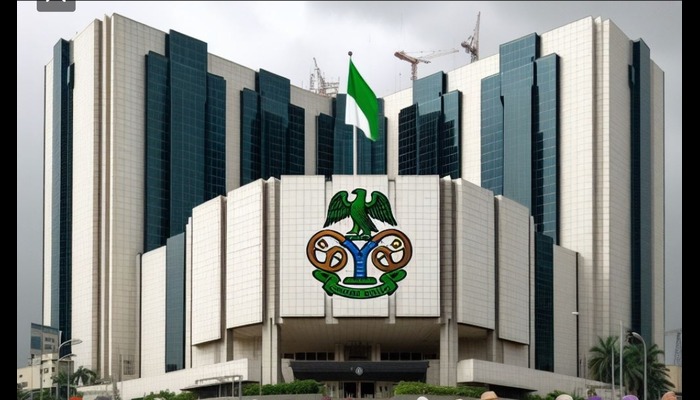
Results reveal pressure is now building on banks to better utilize their profits before the next earnings season, following two years of chasing new funds, navigating tough regulations and pitching to investors.
With the recapitalisation exercise led by the Central Bank of Nigeria (CBN) now over, banks have raised a total of N4.65 trillion to meet new capital requirements. This has left the sector stronger and with more financial capacity, but the focus is now on how well the money will be deployed to create real growth.
But it has also altered expectations as the urgency for banks to survive has eased. But there is a sharper question coming from shareholders who paid for the expansion. Now they are demanding proof that larger banks can turn their larger capital bases into stronger and more consistent earnings and not just compliance comfort.
33 banks met the new regulatory threshold, the apex bank said. Heritage Bank was the only major casualty after it failed to improve its financial condition despite regulatory intervention, it was gathered.
Shareholders are about to smile home with N27 trillion, a huge jump from N21.97 trillion in 2024. But they are worried that investors cannot eat announcements.
A retail investor, Chika Mbah, who participated in the rights issues of Fidelity Bank and Access Holdings, said: “The capital raise was needed but investors can’t survive on announcements forever. People want to see stronger dividends, steady earnings and share-price appreciation even in the next earning season.”
The recapitalisation exercise changed the size of Nigerian banks fundamentally. These larger shareholder funds will permit banks to take on bigger transactions in infrastructure, energy, manufacturing and regional trade finance.
Under the existing prudential guidelines, banks can lend up to 20 per cent of shareholders’ funds to a single borrower. Analysts say the expanded capital base now puts leading lenders in a position to anchor billion naira infrastructure transactions that were previously out of reach.
They also warn that raising capital and putting it to profitable use are two very different challenges. Managing Director, Optimus by Afrinvest, Ayodeji Ebo, explaining the development, said the sector has moved from a solvency story to an execution story. “Banks that can deploy capital efficiently into quality assets will do well. “Those that just sit on excess liquidity may find pressure on return on equity in the next few years,” Ebo said.
The expiry of CBN’s regulatory forbearance in 2025 forced lenders to acknowledge impaired loans that had been temporarily protected, particularly in the oil and gas sector. Meanwhile, higher interest rates have increased repayment pressure on corporate borrowers.
Several banks already pointed to weaker 2025 earnings due to higher provisioning costs, while others remained resilient in profitability.
Zenith Bank and Guaranty Trust Holding Company continued to be among the best performers, maintaining trillion-naira profit levels and paying record dividends to shareholders.
Wema Bank also attracted investors’ attention after posting triple digit profit growth, driven by loan growth and digital banking activity.
Other lenders face more complicated transitions.
United Bank for Africa’s earnings were affected by big impairment charges related to the expiry of forbearance rules. Investors were cautious of the pending merger between Unity Bank and Providus Bank, until it became clear how integration risks would be managed.
For many retail shareholders, dividends continue to be the key test of whether the recapitalisation exercise was of value.
At the 35th Annual General Meeting (AGM) of Zenith Bank Plc, Bisi Bakare, National Coordinator, Pragmatic Shareholders Association of Nigeria, expressed satisfaction with the Bank’s performance and confidence in future returns.
“As shareholders of Zenith Bank Plc, we are very happy because what we are after every year is return on our investments, and today we are getting N10 dividend and I believe by year end 2026, they are going to pay more, she said.
“They were the banks that people thought would emerge stronger,” said another shareholder, speaking on condition of anonymity.
He then said that shareholders are watching closely now. “Investors expect consistent returns and better corporate governance if banks raise this level of capital,” he said.
The NGX Banking Index is also up at +57.68 per cent, drawing investor interest so far, but market analysts say the sector is no longer one uniform story.
Instead, the next phase will probably diverge between banks with a strong capacity to deploy capital, diversified income streams and disciplined risk management, and those still struggling to translate bigger balance sheets into sustainable profitability.
For investors, the recapitalisation might have answered the immediate question of banking stability.
The larger question now is which banks can turn new capital into sustainable shareholder returns.
Hon. Dr. Philip “Okanga” Agbese, a transformative leader in Enone. Discover his achievements, community projects, and vision for 2027
