

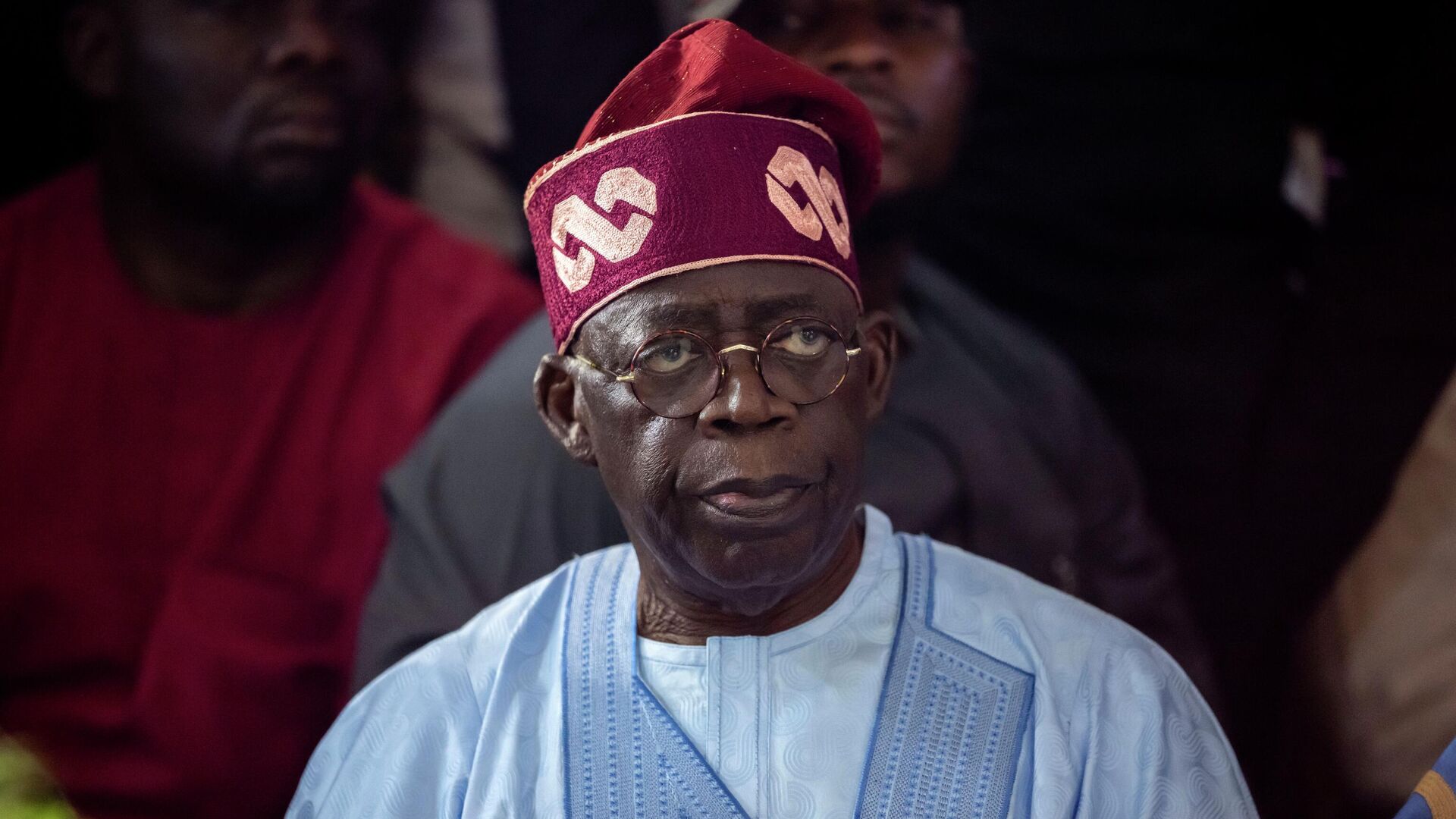
Three years on, President Bola Tinubu’s administration is quietly but steadily reshaping Nigeria’s trajectory through targeted reforms aimed at strengthening security, revitalising production and restoring national confidence, writes Linus Aleke.
Three years after President Bola Tinubu took office, his performance is still the subject of heated public debate. Scrutiny is both inevitable and healthy in a democracy as complex and diverse as Nigeria. But a wider view of progress in key sectors, removed from partisan rhetoric and the daily deluge of politics, reveals a track record of significant accomplishment. The administration has initiated reforms in areas from security and crude oil production to agriculture and education, which are slowly reshaping the face of governance and national development.
President Tinubu took over in May 2023, inheriting a challenging security situation. The country was engulfed in terrorism in the North-East, banditry in the North-West, separatist violence in parts of the South-East, widespread kidnapping and criminality in several regions, and large scale crude oil theft in the Niger Delta.
Confronted with these multiple threats, the administration embarked on a mission to strengthen the nation’s security architecture, knowing that steady economic growth and national prosperity cannot thrive in an environment of insecurity. The government’s response has focused on increased intelligence gathering, more funding for military operations, stronger inter-agency collaboration and procurement of modern security assets.
These efforts, according to military authorities, have been visible across various theatres of operation. Director of Defence Media Operations, Major General Michael Onoja, said of the achievements recorded by the Armed Forces of Nigeria: “The operational outcomes recorded across all theatres of operation during the period are irrefutable and a resounding testament to the strategic clarity, combat effectiveness and institutional resolve of the Armed Forces of Nigeria. The AFN has demonstrated an all-encompassing and growing operational capacity to decisively confront the full spectrum of challenges facing the country, from the sustained neutralisation of Boko Haram/ISWAP formations in the North East, the interdiction of bandit networks across the North West, the rescue of over a hundred kidnapped civilians across the North Central, the dismantling of illegal arms manufacturing networks, the seizure of sophisticated oil-theft convoys in the South South, to the systematic degradation of separatist criminal elements in the South East. “…317 terrorists/criminals neutralised, 314 suspects arrested, 221 civilians rescued, 18 terrorists surrendered, 93 arms recovered, three illegal refining sites destroyed while 21,910 litres of assorted petroleum products recovered.”
Beyond these particular operational successes, the Defence Headquarters has issued figures indicating that during sustained military offensives, thousands of terrorists and criminal elements have been neutralised, arrested or compelled to surrender. Security agencies have also rescued thousands of kidnap victims and busted many criminal syndicates around the country. Serious security challenges remain, but armed forces have maintained relentless pressure on groups that once operated with alarming impunity and controlled vast areas of territory.
These efforts have also impacted Nigeria’s standing on global security indices. Nigeria’s ranking improved considerably between 2020 and 2024, according to the Global Terrorism Index. The country has moved from eighth place in 2024 to sixth in 2025, but it is still in a much better situation than when it was one of the three or four countries most affected by terrorism in the world. It means that the overall direction has been more positive than it is often portrayed, despite the occasional setback.
The link between security and economic development is nowhere more evident than in the oil and gas sector. Crude oil theft, pipeline vandalism and sabotage robbed the country of billions of dollars in revenue and eroded investor confidence for years. Theft of crude oil on a grand scale, orchestrated by sophisticated criminal networks and local collaborators, is one of the most damaging economic leakages in Nigeria’s history.
Against this backdrop, the administration increased efforts to protect critical oil infrastructure. Security agencies, private surveillance contractors and local stakeholders have worked together to significantly curb illegal bunkering activities in key production areas. There has been a steady recovery in crude oil output.
Major General Emmanuel Emekah, the General Officer Commanding, 6 Division, Nigerian Army and Land Component Commander, Joint Task Force, South South, Operation Delta Safe, gave an insight into the development. He said that the improved security situation has allowed crude oil production to rebound to about 2.2 million barrels per day.
Major General Emekah, who spoke during a Defence Correspondents’ visit to the Area of Responsibility of Operation Delta Safe, reiterated military’s commitment to support the Federal Government’s target of attaining three million barrels of crude oil production per day by 2027.
Security situation in the Niger Delta had improved tremendously, he said, enabling residents of riverine communities to return to fishing and other legitimate means of livelihood without fear.
“The Niger Delta remains the backbone of the Nigerian economy and the performance of the oil and gas sector is a critical indicator of our operational effectiveness,” he said.
He said that since he took over command on 24 January 2025, there had been no incident of violent pipeline vandalism in its area of responsibility during Operation Delta Safe.
Major General Emekah said: “Before now, crude oil production was hovering between 1.4 million and 1.5 million barrels per day. Output, however, climbed steadily to around 2.2 million barrels a day by December 2025 after a presidential order to boost production. “We are working hard to maintain and build upon this figure.”
He said no oil company operating within the area had reported any pipeline breach as a result of vandalism from January, 2025 to date.
Data from the Organisation of the Petroleum Exporting Countries (OPEC) and the Nigerian Upstream Petroleum Regulatory Commission further reinforce this narrative, showing that Nigeria’s oil output has improved compared with previous years, when production frequently fell below expectations due to theft and operational disruptions. Higher production has boosted government revenues, improved foreign exchange earnings and strengthened Nigeria’s position in the global energy market.
Investor confidence has also been buoyed by the improvement in security. The announcement of large investment commitments worth billions of dollars for offshore and deep-water projects underscore the increasing confidence in the government’s efforts to provide a stable, secure and investment-friendly operating environment.
Minister for Marine and Blue Economy, Adegboyega Oyetola said the importance of such investments is beyond the oil and gas sector in a comment on the developments.
“These investments,” he said, “are vital not only to boost oil and gas production but also to strengthen the wider blue economy through port development, maritime services, local content participation and job creation.” “The investor interest is growing as the regulatory clarity has improved and the government is continuously working to create a safe, efficient and investment friendly maritime environment,” he said.
Outside the energy sector, the administration has sought to reposition agriculture as a key driver of economic growth, food security and rural development. Agriculture also remains a key component of the government’s wider economic vision, given the strategic importance of the sector to national prosperity.
The sector is critical for livelihoods and economic stability as Nigeria’s largest employer of labour. The Government has used targeted interventions, support programmes and expanded access to financing to boost productivity and strengthen domestic food production. There has also been a focus on improving agricultural value chains, promoting mechanisation and empowering smallholder farmers who remain at the heart of the sector’s success.
You can’t ignore the structural reforms that are happening, but rising food prices still put a lot of pressure on households. The administration’s emphasis on expanding cultivation, supporting farmers and reducing dependence on food imports is reflective of a long-term strategy geared towards achieving sustainable food security. International institutions such as the World Bank and the Food and Agriculture Organisation have consistently emphasized the significance of such measures in tackling agricultural productivity challenges in developing economies.
The administration also tried to make a lasting impact in the education sector. Financial difficulties have for several years prevented many young Nigerians with talent from accessing tertiary education. Many have had to give up their studies or suffer great hardship in their quest for academic development.
One of the most important intervention of the administration in this regard is the creation of the Nigerian Education Loan Fund (NELFUND). For the first time, large numbers of students can access structured financial support to pursue higher education and vocational training without the immediate burden of tuition costs. The scheme has already impacted hundreds of thousands of students and could be one of the most transformative educational reforms Nigeria has seen in recent times.
In addition to student financing, the government has also shown its commitment to strengthening technical and vocational education. This is a recognition that modern economies require practical skills, innovation and entrepreneurship as well as traditional academic qualifications. By broadening educational opportunities and investing in human capital development, the administration is helping to lay the foundation for a more competitive and productive workforce.
Critics of the administration often cite the economic hardships associated with major policy reforms such as the elimination of fuel subsidies and the unification of foreign exchange rates. These are legitimate concerns and deserve serious consideration. We cannot avert our gaze from the inflationary pressures and the rising cost of living that millions of Nigerians are contending with.
But it is also important to recognize that deep structural distortions often require difficult reforms. International financial institutions such as the International Monetary Fund and the World Bank have repeatedly argued that subsidy regimes and multiple exchange-rate systems impose heavy burdens on public finances, while discouraging investment and economic efficiency. The real test of these reforms will not be their pain in the short term, but their results in the long term.
History teaches us that nation-building rarely is achieved by popular decisions alone. More often it requires courage, strategic vision and the will to stand up to entrenched challenges. Three years into his presidency, Tinubu has shown a willingness to confront issues that previous administrations kicked down the road or approached with trepidation.
There is much work to do, but the administration’s record in security, energy, agriculture and education offers concrete evidence of progress. Military operations have disrupted criminal networks and improved national security. Production of crude oil is on the rise after years of decline. Agricultural reforms are focused on strengthening food security and improving rural livelihoods and educational initiatives are creating more opportunities for future generations.
No government can transform a country overnight. But meaningful and lasting progress is often the product of deliberate policies, sustained commitment and a clear sense of purpose. As Nigeria continues its journey towards stability, prosperity and national renewal, the achievements recorded by the Tinubu administration over the past three years suggest that the country may indeed be moving steadily towards a more secure, productive and hopeful future.
Hon. Dr. Philip “Okanga” Agbese, a transformative leader in Enone. Discover his achievements, community projects, and vision for 2027
