

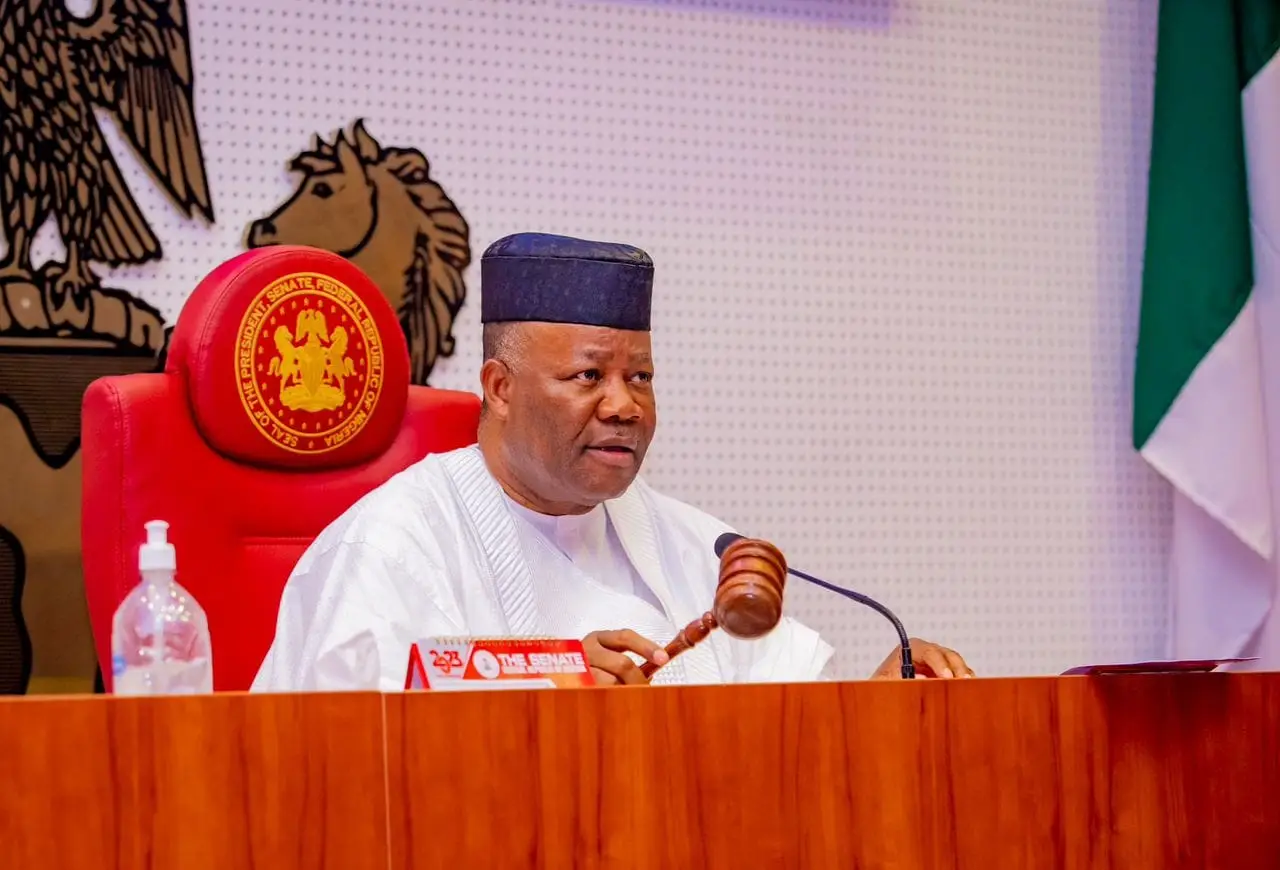
Following a heated plenary session in which 15 senators opposed the contentious clause in Clause 60 of the Electoral Act (Repeal and Re-Enactment) Bill, 2026, the Senate on Tuesday once more approved the electronic transmission of election results, but kept manual collation as a backup.
Following a contentious floor vote, 55 senators voted in favor of keeping the manual fallback mechanism in place, while 14 senators, including Senator Enyinnaya Abaribe of ADC/Abia South, opposed it.
After new concerns were raised regarding inconsistencies in a number of clauses and the timing of the 2027 general elections announced by the Independent National Electoral Commission, the upper chamber, which had previously passed the bill, was forced to reverse its decision and recommit it to the Committee of the Whole.
Clause 60, which deals with the transmission and compilation of election results, was the main topic of renewed contention during Tuesday’s plenary.
Abaribe demanded a division on the section when the proceedings restarted, which led to a boisterous session. A similar attempt was made by the Abia South lawmaker during last week’s emergency plenary, but he withdrew under pressure, causing a stir in the chamber and public outrage.
Opeyemi Bamidele, the Senate Leader, intervened and urged composure.
“Abaribe has the right to demand it, regardless of whether he has done it previously. “Let us give him permission,” Bamidele remarked.
Lawmakers were reminded of Abaribe’s prior unsuccessful campaign by Senate President Godswill Akpabio.
Akpabio said that the earlier demand had been retracted and that “people were mocking you on social media.”
Senators from the opposition quickly protested, claiming that the Senate should have been the appropriate forum for the issue.
Citing Order 52(6) of the Senate Standing Orders, Deputy Senate President Barau Jibrin contended that it would be improper to review a provision that has already been decided. Senator Sunday Karimi briefly addressed Abaribe as a result of the additional commotion caused by his capitulation.
However, Bamidele reminded colleagues that previous rulings on the measure were no longer legitimate because he had properly moved a motion for rescission. He insisted that such motion was consistent with Abaribe’s request for a split.
As the majority prevails, 55 vs. 15
After tense discussions, Akpabio called for a vote.
Senators were asked to raise their hands if they supported Clause 60(3)’s manual backup proviso. Senate Deputy Minority Leader Lere Oyewunmi was among the fifty-five members who supported the measure.
Abaribe and 14 other people rejected it, preferring real-time electronic communication without a manual fallback.
The majority decided to keep the manual backup clause in place.
In the event that network or communication issues prevent electronic transmission, the manually filled-out and signed Form EC8A will be the main source of information used for results compilation and declaration under the modified clause.
In the event that technology fails, manual documentation is still legally crucial even if polling unit results are supposed to be electronically posted to INEC’s Result Viewing Portal (IReV).
Revocation of the 2027 Election Date and Inconsistencies
Prior to the division, the Senate had recommitted the bill for further review after reversing its previous passage.
Bamidele moved that the Electoral Act (Repeal and Re-Enactment) Bill, 2026, be revoked and sent back to the Committee of the Whole in accordance with Order 52(6).
He clarified that the proposal came after INEC announced that the general elections for 2027 would be held in February of that year. Stakeholders have expressed worries, he said, that the date might interfere with statutory timelines and compromise inclusivity.
Additionally, Bamidele cautioned that scheduling elections around Ramadan may have a detrimental effect on logistics, voter turnout, and legitimacy in general.
He also pointed to problems with cross-referencing, numbering, and internal coherence in the bill’s Long Title and several clauses, including Clauses 6, 9, 10, 22, 23, 28, 29, 32, 42, 47, 51, 60, 62, 64, 65, 73, 77, 86, 87, 89, 93, and 143.
The rescission allowed the Senate to begin anew by nullifying all previous legislative actions on the bill. Nevertheless, the conclusion about electronic transmission did not change in spite of the clause-by-clause review.
A few irate MPs left the session after the minority bloc was defeated.
The renewed approval after a week of heavy public pressure, demonstrations, and condemnation from opposition politicians, youth movements, and civil society organizations who had accused lawmakers of trying to undermine electoral protections in advance of the 2027 elections.
Despite the restoration of electronic transmission, the Senate refrained from requiring real-time uploads.
Following voting and documentation, presiding officers must upload polling unit results to IReV. The manually filled-out Form EC8A will be the official basis for collation in cases where network issues prevent electronic transmission.
Akpabio praised both parties following the split.
“I want to express my gratitude to the esteemed senators for their demonstration of democracy and patriotism.
The majority made sure that Form EC8A would continue to be the principal method of election results, but the minority displayed bravery by opposing the proviso. “Polling stations, not polling places, are where elections are won and lost,” he stated.
He called electronic transmission a historic development that enables election observers, including those from other countries, to follow results without physically visiting Nigeria’s more than 176,000 polling stations.
Political circles speculated that Akpabio will change the date of the 2027 presidential election from February 20 to January 13 because he made no comment on the matter.
Occupy the National Assembly protesters warned lawmakers against any move that could jeopardize the legitimacy of the 2027 elections as protests at the National Assembly building continued.
Hon. Dr. Philip “Okanga” Agbese, a transformative leader in Enone. Discover his achievements, community projects, and vision for 2027
