
Custody Dispute Between ICPC and DSS Delays El-Rufai’s Arraignment, Court Adjourns to April 23

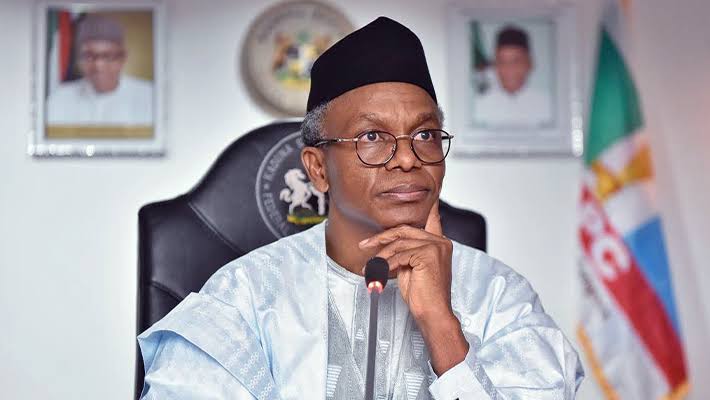
Justice Joyce Abdumalik postponed the arraignment of former Kaduna State Governor Nasir El-Rufai until April 23, 2026, after his absence from court caused the proceedings to stall on Wednesday at the Federal High Court in Abuja.
Since the defendant was currently in the custody of the Independent Corrupt Practices and Other Related Offenses Commission, he could not be presented, according to prosecution attorney Oluwole Aladedoye, who told the court during the resumed sitting, even though the matter was scheduled for arraignment.
Despite both being federal security organizations, Aladedoye said that the Department of State Services, which started the allegations, had no authority over the ICPC and asked the court to give a brief adjournment so the anti-graft agency could present the former governor.
Oluwole Iyamu, the defendant’s attorney, did not object to the adjournment motion, but he did bring up conversations with the prosecution that suggested the state would not object to a bail request.
In public court, the prosecution later affirmed that El-Rufai could be released on bond for the offenses for which he was charged.
The defense then asked the court to consider the bail request before to moving further.
The prosecution, however, objected to the action and requested that the court postpone considering bail for a period of two weeks.
Since the defendant had not yet been properly brought before the court to enter a plea, Iyamu contended that holding his client for two more weeks without arraignment would amount to suppression.
He insisted that the defense could not be held accountable for El-Rufai’s absence from court because they did not place him under arrest.
Additionally, he argued that the defendant’s detention circumstances called for judicial involvement, especially since the agency that filed the accusations was not the one detaining him at the time.
He asked the court to use its authority to order the defendant’s production, citing Section 159 of the statute, regardless of which agency was holding him.
Justice Abdumalik ruled that the question of bail could not be raised because the defendant had not yet been arraigned.
The judge rejected to entertain the bail application at this time, citing Section 156 of the Administration of Criminal Justice Act as justification.
After upon, the judge postponed the arraignment until April 23, 2026.
The DSS filed a three-count case against El-Rufai in the Federal High Court in Abuja on February 16, 2026.
He is accused of illegally listening in on National Security Advisor Nuhu Ribadu’s phone conversations.
In an appearance on Arise TV’s Prime Time Program on February 13, the former governor allegedly acknowledged that he and others had intercepted the NSA’s conversations, according to the charge sheet with the number FHC/ABJ/CR/99/2026.
According to reports, the offenses are punishable under the Nigerian Communications Act of 2003 and the Cybercrimes (Prohibition, Prevention, etc.) Amendment Act of 2024.
In the meantime, El-Rufai has filed a notice request to have the allegations quashed through his legal team.
He characterized the allegations as an abuse of court process and unconstitutional in the application, which was submitted on Tuesday.
He accused the DSS of abusing the criminal justice system to harass, humiliate, and publicly victimize him, and he urged the court to impose N2 billion in costs against the agency.
Hon. Dr. Philip “Okanga” Agbese, a transformative leader in Enone. Discover his achievements, community projects, and vision for 2027
