

The Federal Government of Nigeria has suspended the approval of new colleges of education, polytechnics, and universities for a period of six years.
According to reports, the Federal Executive Council, led by President Bola Ahmed Tinubu, made the decision at a meeting held at the Presidential Villa.
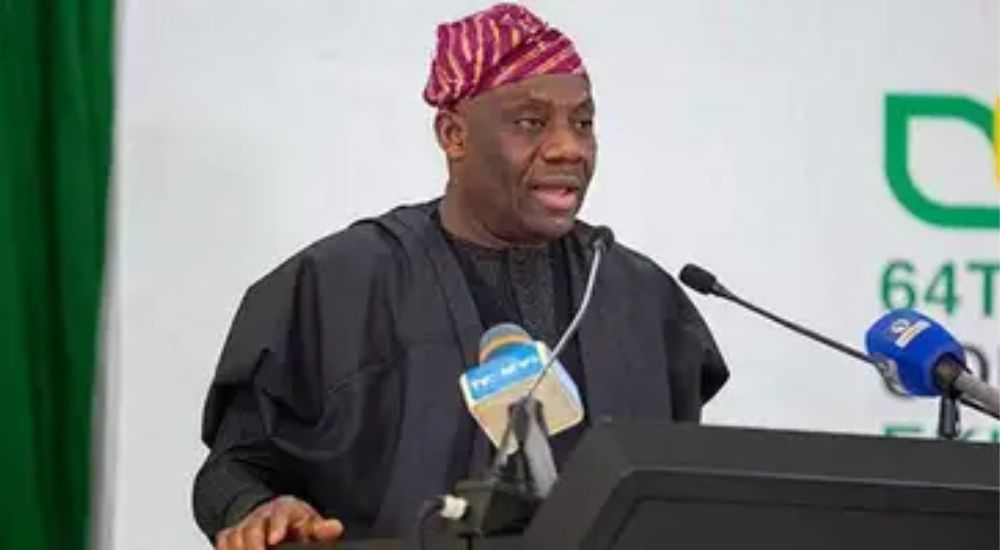
Following the discussion, Minister of Education Tunji Alausa briefed reporters and clarified that the temporary restriction is intended to raise the caliber and stability of the nation’s current postsecondary institutions.
The minister stated that the government feels that the fast expansion of higher education institutions has posed difficulties, notably in upholding strict academic standards and guaranteeing financial stability, especially for privately owned colleges.
Alausa clarified that rather than sanctioning new schools during the suspension period, the administration wants to concentrate on bolstering the institutions that already exist.
He cited the Joint Admissions and Matriculation Board’s most current data, which revealed that over 2.3 million applicants submitted applications for admission to postsecondary schools in the preceding year.
Nevertheless, fewer than 228,000 students were accepted into public universities.
According to the minister, the circumstance demonstrates that despite the nation’s large number of schools, entrance to public universities is still restricted.
The National Commission for Mass Literacy, Adult and Non-formal Education was fully reinstated as an independent commission by the Federal Government during that same council meeting.
The commission’s leadership presented a new plan to educate millions of adults nationwide prior to the ruling.
In the coming years, it is anticipated that the plan would concentrate on digital skills and literacy for young adults.
Tens of millions of Nigerians are illiterate, according to Alausa, and the government wants the commission to increase its outreach.
He clarified that the commission will expand awareness campaigns in rural areas through public education initiatives, community learning centers, and radio and television programs.
Additionally, the Federal Executive Council authorized modifications to the National Postgraduate Medical College of Nigeria’s governing legislation.
at order to advance academically at universities and medical institutes, the amendment will permit medical fellowships earned through the college to be regarded as equivalent to a doctorate.
Hon. Dr. Philip “Okanga” Agbese, a transformative leader in Enone. Discover his achievements, community projects, and vision for 2027
