

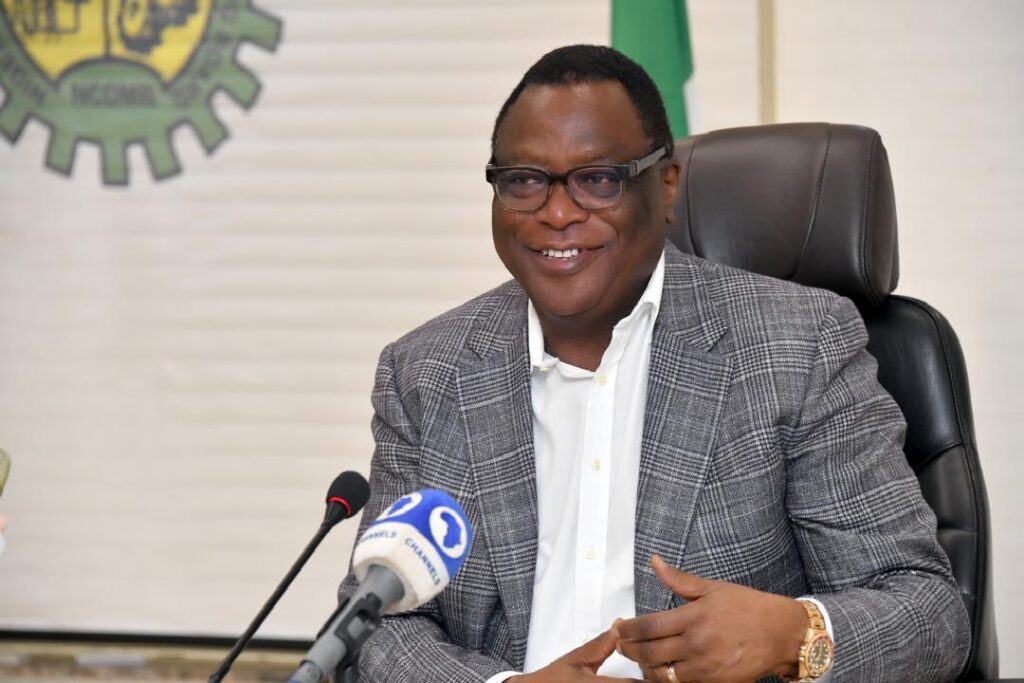
In order to utilize Nigeria’s energy resources and spur economic progress, industry stakeholders must collaborate, according to Engr. Felix Omatsola Ogbe, Executive Secretary of the Nigerian Content Development and Monitoring Board (NCDMB).
In order to highlight the use of the African Continental Free Trade Area (AFCFTA) in the oil and gas industry, he made this statement while giving the keynote talk at the 2026 ACFTA summit, which was organized by NCDMB, PETAN, and Legal Concierge and had as its theme Unlocking Africa’s Energy future through ACFTA.
Citing Nigeria’s enormous oil and gas deposits as well as its renewable energy resources, Ogbe, who was represented by Dr. Abdulmalik Halilu, Director, Corporate Services, NCDMB, emphasized the significance of optimizing the country’s energy potential.
In order to achieve energy security, encourage the creation of local content, and propel industrialization, he emphasized that cooperation was essential.
Ogbe stated that NCDMB is dedicated to helping Nigeria’s energy sector expand by means of programs like infrastructure development, technological transfer, and capacity building.
He urged those in the industry to seize the sector’s prospects and support the economic growth of the nation.
The Executive Secretary’s comments highlight NCDMB’s dedication to advancing the expansion and advancement of Nigeria’s energy industry. It is anticipated that his speech will rekindle conversations on how to unleash Nigeria’s energy potential and promote long-term, steady economic growth.
In order to achieve energy security and self-sufficiency for Africa, the summit gathered together academics, financial institutions, project promoters, and regulatory authorities to shape the implementation of the AFCFTA in Nigeria’s oil and gas industry.
He pointed out that Nigeria’s oil and gas sector has created a framework for AFCFTA domestication that is based on identifying opportunities, building capacity, and exporting capability.
The nation is positioned to gain preferential trade terms due to its strengths in logistics infrastructure, refining capacity, and oil field services.
He pointed out that there are still issues, such as exporters’ compliance requirements and the demand for uniform rules and standards.
The talks centered on strengthening cooperation, developing technology, and instituting metrics to assess how the AFCFTA has affected Africa’s trade balance.
Important issues were brought up, including how to make Ghana’s Tema shipyard a regional center for shipbuilding and repair and how Nigerian goods may reach Angolan markets.
To achieve energy security and self-sufficiency for Africa, the summit gathered together industry executives, policymakers, stakeholders, regulatory agencies, project promoters, financial institutions, and academia to shape the implementation of the AFCFTA in Nigeria’s oil and gas sector.
Hon. Dr. Philip “Okanga” Agbese, a transformative leader in Enone. Discover his achievements, community projects, and vision for 2027
